
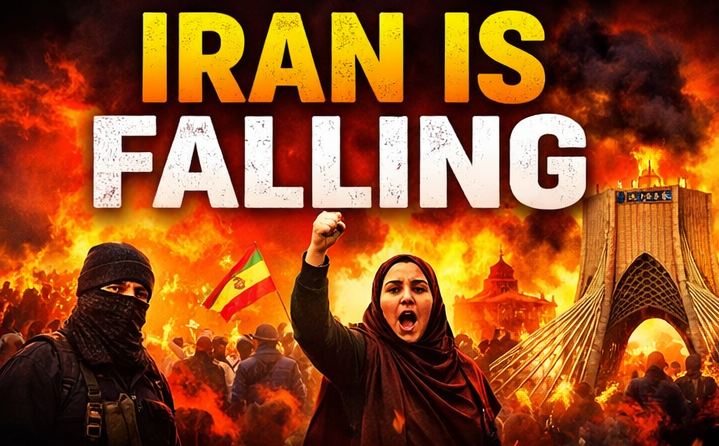
For more than four decades, the Islamic Republic of Iran has survived sanctions, wars, and repeated waves of protest. Yet today, for the first time since 1979, its survival is being questioned not only by dissidents abroad, but by millions on the streets at home.
What began as demonstrations over economic hardship—currency collapse, water shortages, and declining living standards—has evolved into a nationwide movement demanding the end of clerical rule. Reports suggest unrest in over 100 cities, accompanied by strikes, shop closures, and a near-total internet blackout imposed by the state.
The government’s response follows a familiar authoritarian script: digital repression, mass arrests, and the deployment of security forces. However, what distinguishes this moment is Iran’s unprecedented geopolitical isolation. Long-standing regional allies and proxy networks that once provided strategic depth have been significantly weakened, leaving the regime without external buffers.
History shows that authoritarian systems rarely fall solely because of protests; they collapse when internal cohesion fractures. While no verified mass defections have yet occurred, growing reports of reluctance among security personnel to confront protesters raise uncomfortable questions for Tehran.
Whether this crisis ends in repression, reform, or regime collapse remains uncertain. What is clear is that Iran has entered its most consequential political moment in nearly half a century—one whose outcome will reshape the Middle East and reverberate far beyond its borders.
— The Other Side, Rimamnde Shawulu Kwewum