
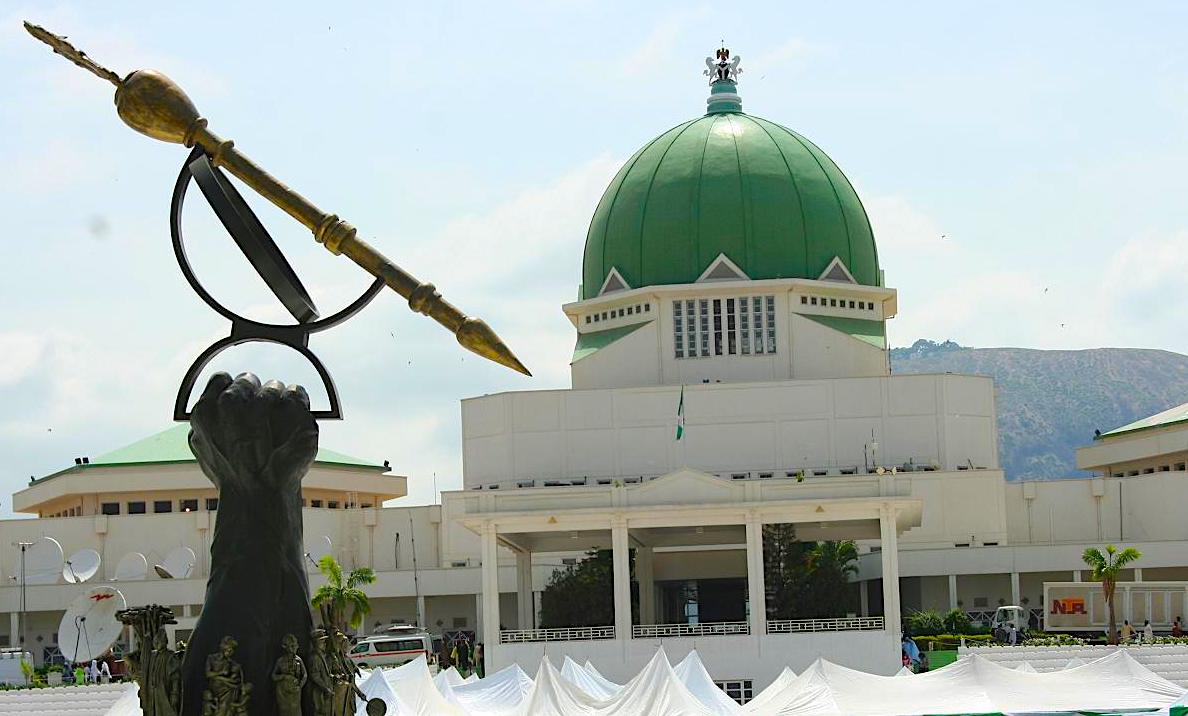
Nigeria’s democracy is again at a familiar crossroads: the point where electoral reform is loudly promised, quietly diluted, and then defended as “procedure.” The new controversy around the Electoral Act (Amendment) Bill 2026 is not just a disagreement between the Senate and the House of Representatives. It is a test of whether the country’s institutions can still produce credible rules for competition—or whether those rules will be written to protect discretion, not transparency.
The immediate trigger is now public: the two chambers passed different versions of a bill that was initially processed through joint work and committee consensus, creating the need for a Conference Committee to reconcile both texts. But beneath the parliamentary mechanics lies a deeper civic question: can Nigerians trust an election system when lawmakers themselves dispute the integrity of what they passed?
The clause that exposes the whole system
The heat is concentrated in one place: Clause 60(3) of the amendment effort (often discussed alongside Section 60 on polling-unit result procedures). News reports show the Senate voted down language that would have compelled real-time electronic transmission of polling-unit results to INEC’s result viewing portal (IReV).
The difference that emerged in the Senate versions calls attention for Senators to be more vigilante. Indeed, a video has surfaced showing that amotion to effect the change was moved by Senator Tahir Munguno from Borno State. The motion was passed by a voice vote. Two issues arise now: Why should the Nigerian National Assembly by using voice vote? Besides the fact that voice votes are dangerously manipulatable, they shield Senators from accountability. What guarantee do have that those who are complaining now did vote to accept the change?
In simple terms, the House position is aligned with what many citizens demand after the disputed 2023 experience: once results are counted and signed at polling units, they should be uploaded electronically immediately—so the numbers cannot be rewritten later in dark corridors of collation. The Senate position, as widely reported, retains a more flexible framework in which the mode and timing of transmission can be set through INEC’s prescribed procedures rather than strict statutory compulsion.
This version is the same with one in the 2022 Electoral Act which the courts have is not mandatory!
This battle is not really about gadgets. It is about where power sits in the result chain:
• In the law (clear, mandatory, enforceable), or
• In discretion (guidelines, operational choices, and the politics of “network issues”).
And Nigerians know what discretion often means in the election context: space for negotiation, delay, interference—and post-vote engineering.
What the current law already says—and why the argument matters
Under the existing Electoral Act 2022, the polling-unit process includes: counting, signing, and announcement at the unit, and then “transfer” of results “in a manner as prescribed by the Commission.” That wording is precisely the problem for reformers: it leaves the transmission standard open-ended, and in high-stakes contests, open-ended rules become loopholes.
The same law also imposes strict electoral timetables—most critically, the requirement that INEC publish notice of elections not later than 360 days before polling day. That legal clock matters because it creates a real-world deadline: if electoral reforms are not concluded early enough, Nigeria risks heading into 2027 under an old framework, or stumbling into rushed, litigation-prone amendments.
It is in this context that reports about the Senate’s amendment process become more alarming. Channels Television reported that senators amended the notice-of-election timeline in the ongoing bill—reducing it from 360 days to 180 days—while rejecting other proposed tougher provisions. BusinessDay’s analysis has likewise warned that the amendment timetable is tight and politically unforgiving, because once INEC issues the notice of election under the governing law, the system becomes difficult to change midstream without legal and operational chaos.
So the dispute is not academic. It is about whether Nigeria is rewriting the rules to increase transparency or to re-legalize ambiguity.
Turnout is telling you the system is losing legitimacy
You can measure trust in politics in many ways, but the cleanest signal is often participation. In Nigeria, participation is collapsing. Voter’s apathy is increasing!
International reporting on the 2023 presidential election highlighted historically low turnout—around 27%—with technology and logistics failures becoming part of a broader crisis of confidence. The Associated Press also recalled that turnout in 2019 was about 34%, meaning Nigeria is not merely stagnating; it is declining into civic withdrawal.
When turnout drops that sharply, elections stop being a national conversation and become an elite transaction. That is the danger. Low-turnout democracies are easier to capture fewer voters to persuade, fewer citizens to offend, fewer consequences to fear.
This is why the debate on electronic transmission inflames passions. To many Nigerians, immediate upload is not a luxury; it is a defensive wall—one of the few remaining ways to reduce the distance between what citizens saw at the polling unit and what later appears at the collation centre.
The global lesson: some countries adopt tech—others retreat from it
There is also a global point that must be made carefully. Yes, several countries have adopted electronic or automated systems in various forms. But international experience is mixed, and the real dividing line is not “advanced” versus “developing.” It is trust.
Some systems succeed because they are embedded in strong institutions, credible audit processes, and enforceable consequences. Some systems fail or are rolled back because voters demand transparency that does not require specialist knowledge to verify outcomes.
That principle—public verifiability—is why Germany’s Constitutional Court famously insisted elections must remain verifiable by ordinary citizens, not only experts.
Nigeria should learn from that debate, but not in the lazy way politicians often do—by using global examples as excuses to delay transparency. The central Nigerian problem is not that machines are inherently untrustworthy. The problem is that Nigeria’s political environment is so distrustful that every weak link becomes a battleground.
INEC itself has repeatedly emphasized that the Electoral Act framework includes provisions around electronic result management, and the Commission’s own explanatory documents acknowledge both the promise and the operational dependencies of electronic transmission.
In early 2026, reports also indicated that INEC’s preparations for the 2027 timetable are being affected by the uncertainty created by ongoing amendments. That is not trivial. Elections are logistics-heavy operations. When the legal rules remain unsettled too close to implementation, you are manufacturing disputes.
The deeper scandal: morality, consequences, and the temptation of “technical salvation”
The most revealing line in this entire controversy is not about transmission; it is about governance. If lawmakers can publicly allege that the agreed text was altered—or that what people think was passed is not what will appear in the final record—then Nigeria’s crisis is bigger than INEC. It becomes a crisis of legislative credibility and institutional morality.
We keep begging technology to solve what only consequences can fix.
In functional states, fraud is constrained not only by systems but by fear of enforcement: you manipulate, you pay. In Nigeria, the culture of consequence is weak, so reforms become a cycle: outrage, amendment, evasion, litigation, disappointment, apathy. Repeat.
That is why “electronic voting” is not a silver bullet. It can reduce certain forms of fraud while expanding others. The real point is that the country must stop designing electoral law around elite convenience and start designing it around citizen confidence.
What should Nigerians demand now?
First, Nigerians should demand clarity: if results will be transmitted electronically, the law should specify when, how, and with what audit trail—not merely hand the matter to discretion.
Second, Nigerians should demand enforceability: obligations without penalties are moral persuasion, not law.
Third, Nigerians should demand openness in the reconciliation process: conference committees must not become backroom repair shops where public demands are traded away for elite comfort.
Finally, Nigerians should demand what democracies ultimately run on: trust restored through consequences. If Nigeria continues to outsource trust to machines while refusing to discipline human misconduct, the technology will become another theatre of contestation—another site where elites argue, and citizens disengage.
The question is no longer whether Nigeria can conduct elections. Nigeria can. The question is whether elections will remain meaningful enough for citizens to show up—and whether the rules of the game will be written to protect the voter, not the loophole.
Because once citizens conclude that elections are “rigged—by law,” the republic does not collapse with a bang. It collapses with silence.