Nigeria is facing a crisis of trust—both at home and abroad. Yet rather than confront this crisis through transparency and accountability, the Federal Government has chosen a different path: spending $9 million lobbying Washington to counter claims that Christians are being targeted and killed because of their faith.
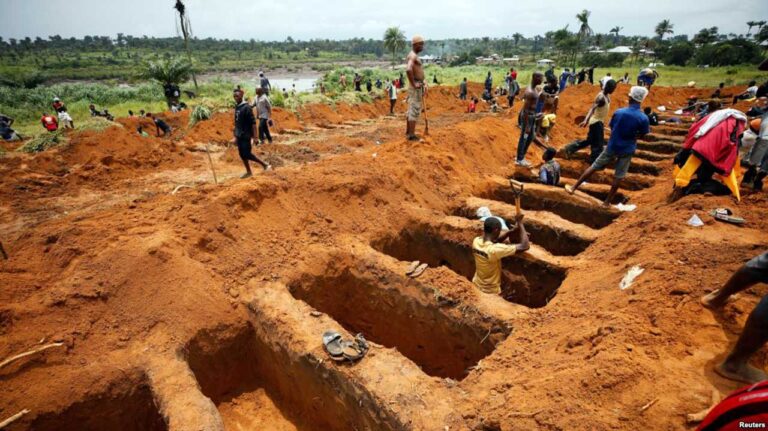
This decision, revealed through filings under the United States Foreign Agents Registration Act, raises serious questions about priorities. At a time when communities across Plateau, Benue, Southern Kaduna, Nasarawa, and parts of the North-East remain devastated by violence, displacement, and loss, billions of naira were allocated not to rebuilding homes or resettling victims, but to managing Nigeria’s international image.
The government’s central argument is denial. Yet denial without evidence convinces no one. There has been no comprehensive national investigation, no public hearings by the National Assembly, and no transparent, independently verified statistics to rebut claims of religiously targeted violence. This vacuum has been filled by international watchdogs, survivor testimonies, and open-source documentation.
In today’s world, truth is increasingly difficult to suppress. Information travels faster than press releases, and credibility is earned through action, not contracts with foreign lobbyists.
Nigeria did not need $9 million to defend itself abroad. It needed a fraction of that amount to establish a credible, multi-faith investigative process at home—and to begin rebuilding shattered communities.
A government that prioritises explanation over restoration risks being seen not as misunderstood, but as complicit through inaction. Nigeria’s path forward lies not in Washington boardrooms, but in the villages and towns where lives must be rebuilt and trust restored.
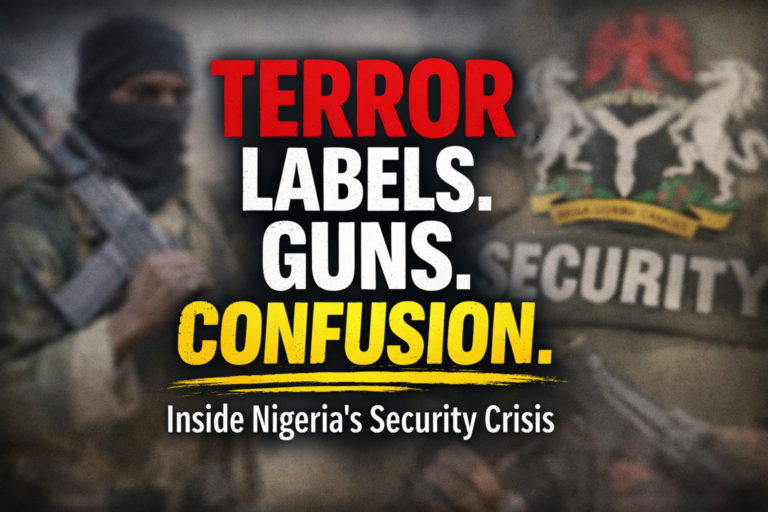
Nigeria’s security landscape remains deeply volatile as armed banditry, kidnappings, and insurgent violence persist across multiple regions, even as security forces intensify operations. In this edition of Security Update, hosted by Rimamnde Shawulu Kwewum, we provide a verified, region-by-region breakdown of last week’s most critical security developments in Nigeria, Africa, and the global arena, with implications for national stability and regional security.
Nigeria: Escalating Rural Violence and Military Response
We begin in Niger State, where armed bandits attacked Damala village in Borgu Local Government Area, killing four residents. The attackers struck late at night, firing indiscriminately and forcing villagers to flee into surrounding forests. No immediate security response was reported during the raid, allowing the gunmen to escape before dawn. This attack follows a recent mass-casualty assault on Kaswandaji Market along the same axis, highlighting the persistent entrenchment of armed groups in North-Central Nigeria. Analysts warn that the vast terrain and overstretched forces raise serious concerns about the sustainability of current security deployments.
In Kogi State, joint police and military units launched a large-scale, air-supported operation targeting bandit camps across forested areas. Security agencies confirmed that multiple hideouts were destroyed and several suspects neutralized, though official casualty figures were not disclosed. Kogi has increasingly emerged as a strategic corridor linking armed groups operating across Niger, Kwara, Ondo, and Edo States, marking a shift toward intelligence-driven, inter-agency cooperation. However, experts caution that such offensives often trigger reprisals against civilian communities suspected of collaborating with security forces.
In Kaduna State, police arrested suspected bandits in Chikun Local Government Area and recovered 65 stolen cattle following a series of livestock raids. While no fatalities were reported, cattle rustling remains a major financial lifeline for armed groups and a significant driver of rural conflict. Authorities say investigations are ongoing to dismantle wider criminal networks, even as livestock-related violence continues to fuel retaliatory attacks across Kaduna and neighboring states.
In the Middle Belt, Nigerian troops raided kidnappers’ hideouts in Plateau State, killing several suspects and recovering weapons. The camps were reportedly used to detain abducted victims. The operation followed actionable intelligence amid a surge in kidnappings targeting rural roads and farming communities. While security officials say operations will continue, criminal groups continue to exploit forested terrain to evade capture.
In Zamfara State, bandits attacked Ferenruwa village in Maru Local Government Area, killing an Assistant Superintendent of Police and five civilians, while abducting several villagers. The killing of senior security personnel underscores the growing boldness of armed groups. Zamfara remains one of Nigeria’s most violent states, plagued by banditry, kidnappings, and attacks on communities. The crisis is further complicated by illegal gold mining, often referred to as “blood gold,” which analysts say helps finance armed groups and fuels insecurity.
Africa: Insurgency and Political Repression
Beyond Nigeria, Somali forces, supported by international partners, killed 29 Al-Shabaab fighters in the Middle Shabelle region. Vehicles and weapons were destroyed, disrupting planned attacks on civilians. While the operation was a tactical success, analysts warn that Al-Shabaab frequently regroups after such losses.
In Tanzania, human rights groups and the United Nations allege that security forces may have killed large numbers of civilians following the disputed 2025 elections, with incidents reported in Dar es Salaam, Mwanza, and Arusha. The government insists it acted to restore order, while opposition figures accuse authorities of extrajudicial killings—reflecting a broader trend of political repression in parts of East Africa.
Global: Escalation and Infrastructure Vulnerabilities
Globally, Russia launched hypersonic missiles at targets near western Ukraine, close to NATO borders, marking a dangerous escalation in the ongoing war. Civilian casualties were reported. In Iran, protests that began over economic hardship have evolved into calls for an end to clerical rule, with reports of thousands killed. Meanwhile, extremist sabotage of power cables plunged 100,000 people in Berlin into darkness, exposing critical infrastructure vulnerabilities in Europe.
Across Nigeria, Africa, and the world, these developments show how modern security threats are increasingly interconnected—linking rural banditry, insurgency, political repression, and infrastructure sabotage.
Subscribe to Security Update for verified weekly reports on Nigeria, Africa, and the world.
They say when evil falls, it falls like rain. Today, that proverb feels painfully accurate for Nigeria. kidnappings, terrorism, and violent crime, a deeper and more dangerous crisis is unfolding — one defined by hunger, collapsing rural livelihoods, and a rapid slide into mass poverty.
In this episode of The Other Side, Rimamnde Shawulu Kwewum examines the economic and security dynamics pushing Nigeria toward a food and poverty emergency. Recent reports cited by Vanguard reveal a sobering projection: no fewer than 141 million Nigerians are expected to live in poverty this year. This figure is drawn from the Economic Outlook 2026 published by PricewaterhouseCoopers, which warns that more than 62 percent of Nigeria’s population may fall below the poverty line as macroeconomic “reforms” take hold without adequate social or productive safeguards.
Economists quoted in the report describe the situation as severe and worsening — a reality driven not only by inflation and policy adjustment shocks, but by a breakdown in the country’s productive base, particularly agriculture. The crisis is visible on the ground. In Kaduna State alone, over 2,000 farmers recorded losses estimated at ₦10.16 billion during the 2025 farming season.
These farmers, drawn from all three senatorial districts, were hit by a nationwide crash in maize prices while the cost of fertilizers, seeds, and other inputs continued to rise sharply. Many are now appealing to the federal government and the Central Bank for urgent intervention. Similar patterns are playing out elsewhere. Cassava farmers in Atani and surrounding communities in Ogbaru Local Government Area suffered devastating post-harvest losses due to flooding, leaving many unable to recover financially.
According to BusinessDay, more than 1,356 farmers have been killed in the last five years due to persistent insecurity — a figure widely considered conservative given the scale of rural violence and unreported kidnappings.
In states such as Benue State and Taraba State, entire farming communities have been displaced for years. In some areas, farmers can only access their land after paying protection money to bandits. In others, those who attempt to harvest their crops are attacked or killed. The result is a shrinking agricultural workforce and abandoned farmlands across Nigeria’s food-producing belts.
Yet insecurity is only half the story. Government policy has compounded the crisis. The decision to license large-scale importation of rice, maize, and beans has collapsed local prices, leaving farmers unable to sell their produce at sustainable rates. Traders who once exported Nigerian beans can no longer do so. Domestic produce is now selling below market value, making it impossible for farmers to reinvest in the next planting season. This creates a dangerous cycle: low prices discourage farming; insecurity prevents access to land; rising input costs block recovery; and cheap imports undermine local production.
As farmers exit agriculture, unemployment rises, especially among young people who would otherwise remain in rural communities. Looking ahead, Nigeria faces a looming twin crisis — worsening unemployment and severe food shortages. If farmers cannot return to their fields, and if government lacks the resources to sustain imports indefinitely, food availability will decline sharply. Even where imports continue, affordability will remain out of reach for millions displaced by violence or trapped in urban slums.
In this episode, The Other Side asks critical questions: Are Nigeria’s economic reforms structured to protect the productive sector? Why does government prioritise food importation over supporting domestic farmers? Should Nigeria adopt production-focused subsidies — similar to policies in the United States — by buying farm produce at market value instead of flooding the market with cheap imports?
Rimamnde Shawulu Kwewum challenges policymakers, analysts, and citizens to rethink Nigeria’s economic trajectory. Without security in rural areas and deliberate investment in local production, reforms risk deepening poverty rather than reversing it.
What is your assessment of the government’s approach? Can Nigeria reverse this trend before hunger and unemployment spiral further out of control? Subscribe for weekly insights on Nigeria’s politics and democracy.
Join this channel to get access to perks: https://www.youtube.com/channel/UC0F3fBLsmMzNsCjtyDcT1rQ/join
For more than four decades, the Islamic Republic of Iran has survived sanctions, wars, and repeated waves of protest. Yet today, for the first time since 1979, its survival is being questioned not only by dissidents abroad, but by millions on the streets at home.
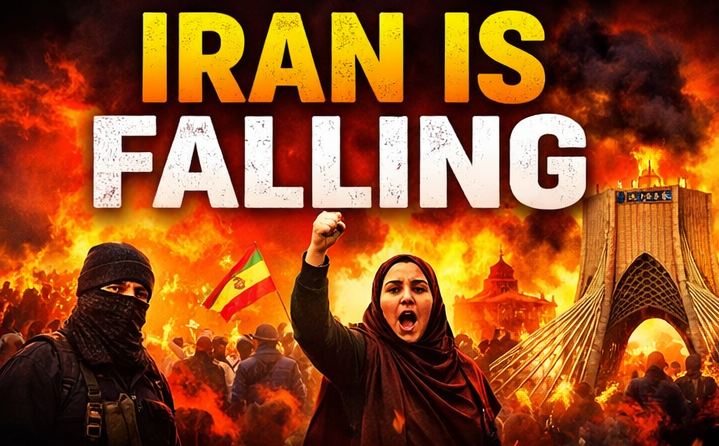
What began as demonstrations over economic hardship—currency collapse, water shortages, and declining living standards—has evolved into a nationwide movement demanding the end of clerical rule. Reports suggest unrest in over 100 cities, accompanied by strikes, shop closures, and a near-total internet blackout imposed by the state.
The government’s response follows a familiar authoritarian script: digital repression, mass arrests, and the deployment of security forces. However, what distinguishes this moment is Iran’s unprecedented geopolitical isolation. Long-standing regional allies and proxy networks that once provided strategic depth have been significantly weakened, leaving the regime without external buffers.
History shows that authoritarian systems rarely fall solely because of protests; they collapse when internal cohesion fractures. While no verified mass defections have yet occurred, growing reports of reluctance among security personnel to confront protesters raise uncomfortable questions for Tehran.
Whether this crisis ends in repression, reform, or regime collapse remains uncertain. What is clear is that Iran has entered its most consequential political moment in nearly half a century—one whose outcome will reshape the Middle East and reverberate far beyond its borders.
Nigeria entered the new year amid sustained insecurity across multiple regions, with coordinated attacks, mass killings, military ambushes, and kidnappings recorded between late December and the first week of January. The incidents underscore persistent weaknesses in rural security and the expanding geographical spread of armed violence.
In Kaduna State, bandits attacked a community in Lere Local Government Area on December 29, killing at least three residents and abducting three others during a late-night raid. Local sources reported that the attackers operated for several hours before withdrawing. Community leaders in southern Kaduna say more than 160 villages in the area have been affected by years of banditry and forced displacement.
Security authorities later announced the arrest of 39 suspects, said to have relocated from forest reserves in Sokoto State into neighbouring areas. Officials described the arrests as a preventive action to curb spillover by armed groups displaced by recent counterterrorism operations in the northwest.
In Kogi State, gunmen attacked the Omi-Arab community in Yagba West Local Government Area on December 31. Residents reported gunfire and overnight abductions. While casualties were not immediately confirmed, the incident adds to a growing pattern of kidnappings along the Yagba axis, an area increasingly described by security sources as an emerging corridor for extremist infiltration.
The deadliest attack of the period occurred in Niger State, where gunmen stormed Kaswan Daji Market in Borgu Local Government Area on January 4. Police confirmed that at least 30 people were killed, with market stalls and homes set ablaze. Local residents said some abducted persons may include schoolgirls previously released after negotiations. Federal authorities ordered intensified manhunts following the attack, which ranks among the most severe in the state in recent months.
In the northeast, a Nigerian military convoy travelling from Maiduguri to Damasak was ambushed in Mobbar Local Government Area of Borno State after striking a landmine. At least nine soldiers were reported killed, while five others sustained serious injuries. Militants reportedly opened fire after the explosion, destroying armoured vehicles. The attack points to renewed insurgent capability despite ongoing military operations in the region.
Elsewhere, joint security operations across Plateau, Zamfara, Kogi, and Borno States reportedly led to the neutralisation of suspected terrorists, the rescue of abducted victims, and the arrest of logistics suppliers. In Adamawa State, explosive devices were recovered without casualties, while Bayelsa State recorded river piracy incidents that left at least two passengers dead along the Nun River. In Oyo State, mob violence in Ibadan resulted in the lynching of three individuals following false accusations of theft, highlighting the growing risks of vigilantism.
Beyond Nigeria, insecurity persisted across parts of Africa. In eastern Democratic Republic of Congo, suspected Allied Democratic Forces fighters killed at least 15 civilians in Ituri Province. In Sudan’s Darfur region, renewed militia attacks reportedly claimed more than 100 civilian lives in one week, exacerbating displacement and food shortages. A migrant boat capsized off the coast of The Gambia, leaving about 40 people feared dead or missing.
Globally, the Russia-Ukraine war continued into the new year with renewed strikes and counter-claims of drone attacks, while Iran witnessed widespread protests across more than 100 cities, raising questions about internal stability. Developments in Venezuela also drew international attention amid escalating legal and diplomatic tensions.
Security analysts note a recurring pattern across many of these incidents: rural communities remain the most exposed, with armed groups exploiting weak state presence, economic hardship, and porous terrain. As the year begins, the scale and spread of violence point to a complex security environment requiring sustained, coordinated responses at both national and regional levels.
What happens when the laws a government is enforcing are not the same laws its parliament approved?
In this episode of The Other Side, Rimamnde Shawulu Kwewum examines a growing constitutional controversy surrounding Nigeria’s new tax regime. Allegations have emerged that the tax laws currently being implemented differ from the versions passed by the National Assembly, raising profound questions about legality, due process, and democratic accountability.
The issue came to public attention after a member of the House of Representatives alleged that the Acts gazetted and circulated by the executive arm contain provisions that were not approved by lawmakers. Rather than a transparent floor debate, the matter was referred to a committee that failed to conclude its work before parliamentary recess—leaving Nigerians governed by laws whose authenticity remains in dispute.
This episode breaks down how laws are meant to move from parliament to implementation: passage by both chambers, transmission, presidential assent, and official gazetting. Each step exists to prevent precisely this kind of ambiguity. When that chain is compromised, the rule of law itself is threatened.
Special focus is placed on the role of the Government Printer and tax authorities, and whether due diligence was followed before enforcement began. If laws were altered after assent, then implementation may be unconstitutional, with far-reaching implications for revenue collection, compliance, and investor confidence.
Beyond tax policy, this discussion exposes a deeper governance problem—weak institutional accountability and blurred lines of authority. If laws can change without parliamentary approval, then democratic oversight is reduced to a formality.
This episode is essential viewing for policymakers, lawyers, civil society, and citizens concerned about constitutional order and the future of Nigeria’s democracy.
Subscribe for weekly insights on Nigeria’s politics and democracy.
This edition of Security Update, hosted by Rimamnde Shawulu Kwewum, examines Nigeria’s deepening security crisis through three interconnected developments: the release of kidnapped schoolchildren in Niger State, renewed presidential rhetoric on branding bandits as terrorists, and mounting controversy over the arming of auxiliary forces linked to vigilante groups.
Nigeria: School Kidnappings and Conditional Releases
Nigerian authorities have confirmed the release of an additional 130 students abducted from a Catholic school in Niger State, following the earlier release of 100 others. Prior disclosures from church officials also clarified that some pupils initially listed as abducted had escaped independently. Despite the positive outcome, critical questions remain unanswered. Authorities have not disclosed whether negotiations involved ransom payments, intermediaries, or security concessions.
These releases follow earlier mass kidnappings, including 25 pupils abducted in Kebbi State and over 300 taken in Niger State, incidents that forced multiple state governments to shut down schools. The recurring targeting of educational institutions underscores the sustained vulnerability of children within Nigeria’s security landscape.
The episode also revives unresolved national wounds. Over 90 Chibok schoolgirls abducted more than a decade ago remain unaccounted for, alongside Leah Sharibu, the sole remaining captive from the Dapchi school abduction in Yobe State. Her continued detention remains a potent symbol of state failure and unresolved counterterrorism commitments.
Presidential Declarations vs Legal Reality
During the presentation of the 2026 federal budget, President Bola Ahmed Tinubu again stated that armed bandits and violent criminal groups would be treated as terrorists under Nigeria’s security framework. While the declaration aligns with public frustration over mass killings and kidnappings, the legal implications are less straightforward.
Under Nigerian law, terrorist designation is not achieved by presidential pronouncement alone. Previous designations, such as that of IPOB, followed judicial proceedings and formal court orders. To date, no court judgment exists classifying bandit groups operating across the North-West, North-Central, North-East, or South-West as terrorist organizations.
This legal gap raises operational questions. Without judicial backing or new legislation from the National Assembly, security agencies lack the expanded legal authority typically associated with counterterrorism operations. As a result, critics argue that repeated declarations risk remaining symbolic rather than transformative.
Kwara Controversy: Armed Auxiliaries and Public Trust
Further controversy erupted following reports that armed individuals apprehended in Kwara State were linked to vigilante structures allegedly sanctioned by the Office of the National Security Advisor (ONSA). While initial reports suggested affiliation with the Miyetti Allah Cattle Breeders Association of Nigeria (MACBAN), both ONSA and MACBAN issued denials.
ONSA acknowledged authorizing weapons for vetted auxiliaries under the Terrorism Prevention and Prohibition Act 2022, insisting that recipients were formally recruited, supervised, and deployed in support roles. MACBAN, however, denied institutional involvement, stating that any armed individuals acted independently.
The incident triggered wider concerns about transparency, coordination, and accountability. Questions persist over how many groups have been vetted, where they operate, under whose command they function, and whether issued weapons are tracked and recoverable. Critics warn that inconsistent enforcement risks reinforcing extremist propaganda that claims government complicity in arming violent actors.
Patterns, Risks, and Strategic Implications
Taken together, these developments reveal a pattern of policy ambiguity, legal uncertainty, and uneven enforcement. While Nigeria continues to rely on hybrid security responses involving auxiliaries and vigilantes, the absence of clear public registries, judicial oversight, and unified command structures undermines trust and coherence.
Politically, the contradictions expose vulnerabilities within Nigeria’s counterterrorism narrative at a time of heightened international scrutiny. Humanitarian consequences remain severe, particularly for children, displaced communities, and rural populations caught between armed groups and inconsistent state protection.
Why This Matters
Security in Nigeria is no longer defined solely by battlefield outcomes. It is shaped by legality, legitimacy, and public confidence. Without resolving these contradictions, tactical successes—such as hostage releases—risk being overshadowed by long-term institutional fragility.
Subscribe to Security Update for verified weekly reports on Nigeria, Africa, and the world
Nigeria may be witnessing the quiet collapse of one of the most consequential political parties in its democratic history.
In this edition of The Other Side, Rimamnde Shawulu Kwewum examines the steady unraveling of the People’s Democratic Party (PDP) — a party once central to Nigeria’s return to civilian rule, now weakened by defections, internal fractures, and unresolved power struggles.
Formed as a broad coalition to end military dominance and stabilise the post-authoritarian state, the PDP was never built around a shared ideology. Its strength lay in compromise, elite consensus, and the urgency of a historic mission. For years, that arrangement held. But the very compromises that enabled stability also planted the seeds of decline.
This analysis traces the PDP’s journey from dominance to dysfunction: recurring internal crises, contested leadership transitions, disputes over zoning and succession, and a pattern of elite opportunism that hollowed out party cohesion. Each electoral cycle deepened mistrust. Each unresolved conflict weakened institutional discipline.
With sitting governors defecting, rival factions locked in court battles, and no unified national strategy ahead of the 2027 elections, the PDP’s capacity to function as a credible opposition is now in serious doubt. What emerges is not merely a party in trouble, but the collapse of a political arrangement designed for a specific historical moment.
The episode also raises broader democratic questions. Effective opposition is essential for accountability, balance, and governance. If Nigeria loses a viable opposition without a coherent alternative emerging, the implications will extend far beyond partisan politics.
Is the PDP truly at the end of its life — or merely at the end of a chapter? And if it is fading, what will rise to fill the vacuum it leaves behind?
This conversation is essential for anyone seeking to understand Nigeria’s evolving political order as the country moves toward another critical election cycle.
Every week, Nigeria produces a new controversy. But some controversies strike at the very heart of constitutional democracy. In this episode of The Other Side, Rimamnde Shawulu Kwewum examines a developing crisis that raises one of the most serious questions Nigeria has faced in recent years: Were Nigeria’s new tax laws altered after being passed by the National Assembly?
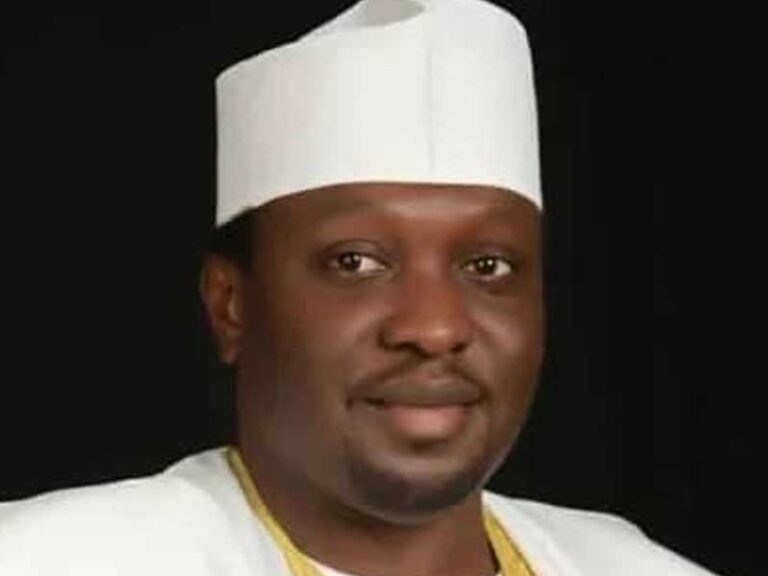
On December 17, 2025, the House of Representatives was thrown into turmoil when a lawmaker from Sokoto State, Honourable Abdulsamad Dasuki, raised a constitutional alarm. His allegation was stark and unsettling. According to him, the versions of Nigeria’s newly enacted tax laws that were gazetted by the federal government are not identical to the versions debated, voted on, and passed by Parliament. These are not alleged typographical corrections. They are claims of insertions, deletions, and substantive modifications that may have altered legislative intent.
This episode of The Other Side, hosted by Rimamnde Shawulu Kwewum, unpacks what this means for Nigeria’s governance, rule of law, and democratic order.
The tax reforms in question are not minor regulations. They form a comprehensive overhaul of Nigeria’s fiscal architecture and are scheduled to take effect on January 1, 2026. The package includes the Nigerian Tax Act 2025, the Nigerian Tax Administration Act 2025, the Nigerian Revenue Service Establishment Act 2025, and the Joint Revenue Board Establishment Act. Together, they repeal long-standing legacy laws and replace the Federal Inland Revenue Service with a new Nigerian Revenue Service.
At the centre of the controversy is the scope of power granted to this new revenue authority. As gazetted, the Nigerian Revenue Service appears positioned to collect taxes for all tiers of government—federal, state, and local. This represents a historic centralisation of fiscal authority in a country that has spent decades debating fiscal federalism and devolution of powers.
Lawmakers argue that some of these powers were never approved by Parliament.
According to the allegations raised on the floor of the House, the gazetted versions introduce coercive enforcement mechanisms, including arrest powers, garnishment without court orders, compulsory foreign currency conversions, and security deposits as prerequisites for tax appeals. Provisions on oversight, accountability, and reporting—adopted by Parliament—are said to be missing.
In this episode, Rimamnde Shawulu Kwewum explains why even so-called “editorial corrections” are constitutionally sensitive. In law, a single word, punctuation mark, or clause can radically alter meaning. Nigeria’s own history proves this. The disputed 1979 presidential election turned on the interpretation of the words “and” and “or” at the Supreme Court. If language can determine who becomes president, it can certainly determine how taxes are collected and powers exercised.
Under Nigeria’s Constitution, neither the presidency, legislative clerks, nor any executive agency has the authority to amend a bill after it has been passed by both chambers of the National Assembly. Their role is limited to assent or veto. Any change—minor or substantive—must return to Parliament for debate and approval.
If the allegations are proven, the implications are profound. Any law gazetted in a form different from what Parliament passed may be null and void. Even more consequential is the possibility that the president may have assented to a version that Parliament never approved. In constitutional terms, that would amount to a veto, not an enactment.
This episode situates Nigeria’s tax controversy within a broader global context. Around the world, disputes over executive overreach, legislative authority, and the integrity of democratic processes are intensifying. Nigeria’s case is not just about tax collection. It is about whether constitutional boundaries still matter, whether Parliament’s authority can be quietly overridden, and whether citizens can trust the legal foundations governing their lives.
The Other Side does not tell viewers what to think. It asks the hard questions others avoid. Can any authority outside Parliament amend laws passed on the floor of the chambers? What happens if implementation proceeds on a legally defective foundation? And what does this episode reveal about the state of Nigeria’s democracy?
This conversation is essential for lawmakers, lawyers, policy analysts, business owners, and citizens alike.
Share your views in the comments. Do you believe the new tax laws can legally take effect in 2026 under these circumstances? And what should the National Assembly do next?
Subscribe for weekly insights on Nigeria’s politics and democracy.
Bashir Ahmad has returned to the public space with a familiar tactic. He downplays numbers. He doubts documented suffering. He questions figures that speak to the depth of our country’s tragedy. He does all these with confidence. He frames his arguments as if he alone owns the truth. He does this even when survivors tell their stories. He does it when communities are emptied by violence. He does it when families flee from their homes.
He claims that Benue State cannot have hundreds of thousands of people in Internally Displaced Persons’ camps. He says that those who mention such figures are spreading falsehood. He tries to sound firm. He tries to sound concerned. But his concern hides something else. His concern hides a long record of selective outrage. His concern hides his defence of violence that targets minorities. His concern hides his attempts to question a tragedy that has consumed lives in the Middle Belt and beyond.
Bashir Ahmad has denied the reality of the systematic targeting of Christians in northern Nigeria. Yet he openly supports the death penalty for blasphemy, while conveniently ignoring the grim truth that this so-called penalty is rarely imposed by courts and almost always executed by mobs of self-appointed executioners who claim divine warrant for violence. The stoning and killing of Esther Deborah in Sokoto remains a stain on the national conscience, and on the consciences of those who, like him, chose to look away. When citizens are dragged to their deaths on the basis of untested accusations and religious hysteria, silence is not neutrality; it is complicity. To keep studious silence in the face of public killings is to grant moral cover to the killers, and to normalise barbarity as faith. History is unforgiving to those who speak loudly for punishment but fall mute when injustice spills into the streets. He famously described one of the leaders of Hamas thus: “He was born, lived and died as a leader”. This is why his recent comment on the figures from Benue State rings hollow. His comment opposes verified data. His comment ignores testimonies of aid workers. His comment ignores the truth. He acts as if Benue State stands alone. He pretends that displacement in Nigeria is small. He wants the country to deny a crisis that has been with us for more than a decade.
Facts speak louder. We have hundreds of thousands of Nigerians in Cameroon, Niger and Chad. We have some in Sudan, where conflict forced them to run a second time. In the Minawao camp in the far north region of Cameroon, more than four hundred and fifty thousand Nigerians live in long term exile. This number appears in reports from aid agencies. Regional officials repeat it. The figure reflects a real human burden. It is not fiction. Niger holds more than one hundred and fifty thousand people from Borno. The Governor of Borno, Professor Babagana Zulum, confirmed this figure in public. He visited many camps. He spoke with men, women and children. He heard stories of villages burnt to ashes. He heard stories of hunger. He heard stories of families torn apart. He did not hide behind false arguments. He did not question the humanity of the displaced. Chad also hosts several camps filled with people who ran from the Lake Chad region. Some came from Borno. Some came from Yobe. Some came from Adamawa. Violence uprooted them. They crossed borders to stay alive. Their stories echo the stories of those in Benue State. They speak of attacks. They speak of raids. They speak of fear. They speak of the long silence of the authorities who should protect them. That silence is not incidental; it is consequential. When those entrusted with the monopoly of force and the duty of protection retreat into muteness, they leave citizens exposed to the tyranny of the mob. Authority that refuses to speak when blood is shed forfeits its moral legitimacy. In such moments, silence becomes a signal to victims that they are alone and to perpetrators that they may proceed without consequence. A state that withholds its voice in the face of public violence ultimately teaches its citizens that justice is negotiable and life expendable.
When victims speak of Benue State, they speak of communities that have faced unending attacks. They speak of farmers who watched their fields destroyed. They speak of families who ran to schools, churches and open shelters. They speak of people who lost their homes. They speak of many who live in temporary camps that might likely become permanent camps. Their numbers are large. Their needs are urgent. No one who cares about truth will doubt their presence.
To understand this crisis, I turn to scholars of displacement. They study the human catastrophe of refugees and internally displaced persons. Their works show the depths of trauma. They show the costs of silence. They show the consequences of denial.
Alexander Betts offers a clear explanation of how states respond to forced migration. He writes about states that downplay numbers when they want to escape blame. He notes how governments manipulate statistics for political comfort. He explains that forced migration is not only a humanitarian event. He says it is also a political event. His research shows that denial blocks meaningful policy. A state that refuses to accept the scale of a crisis cannot resolve that crisis. Betts teaches us that public figures who question verified data harm the displaced. His work speaks directly to the conduct of Bashir Ahmad. When he doubts the figures from Benue State or from the region, he plays a political game with human sufferings. Hannah Arendt deepens this understanding. She described the experience of stateless people in Europe. She wrote about people who fled persecution and had no home. She said they lost the right to have rights. She explained that displacement strips a person of identity. She stressed that forced migration is not only the loss of a house. It is the loss of protection. It is the loss of belonging. It is the loss of dignity. Her ideas apply to the Nigerian crisis. Many displaced Nigerians feel abandoned. They are citizens but they feel stateless. They queue for food. They sleep in crowded halls. They raise children in fear. Arendt helps us see why denial adds a second injury. It reduces their humanity in the eyes of the public. Didier Fassin adds a moral dimension. He studies how societies value some lives more than others. He writes about governments that hide the suffering of certain groups. He exposes the inequality in humanitarian attention. He argues that displacement must be understood through the lived experience of survivors. He warns about the danger of public figures who question human suffering. He explains that denial is not neutral. Denial promotes cruelty. Denial protects those who cause harm. His work exposes the behaviours of people like Bashir Ahmad. When he disputes figures from Benue State or from refugee camps in Cameroon, Niger and Chad, he joins a tradition of silencing. This silence deepens the pain of victims.
The crisis in Nigeria fits into the findings of these scholars. Violence in the north east forced millions to flee. Many never returned. Some died in the bush. Some died in transit. Some perished in camps. Some crossed borders on foot. Aid groups recorded their stories. Governments confirmed many of these accounts. Independent monitors backed the figures. These facts do not depend on the opinions of political aides. The Middle Belt has faced waves of attacks for two decades. Entire villages emptied. Families fled to towns. Farmers abandoned fields. Camps sprang up in Benue State. Camps grew in Nasarawa. Camps expanded in Plateau. These camps did not appear by chance. They came from fear. They came from pain. They came from the failure of the state. People like Bashir Ahmad want to erase this struggle. They want to shift attention away from victims. They want to make light of their numbers. They want to call verified figures lies. They want the country to believe that nothing serious happened. They want to weaken solidarity for the displaced.
When a man who denied Christian genocide tells you that the figures from Benue State are false, you must ask who benefits. Denial benefits perpetrators. Denial weakens public outrage. Denial hides state failure. Denial protects those who looked away while communities burned. Today, our country faces one of the largest displacement crises in Africa. Millions have moved from their homes. Millions live in camps across the region. They sleep in overcrowded halls. They queue long hours for food. They struggle with poor hygiene. They lose children to disease. They lose dignity. They lose hope. A former presidential aide should know these facts. He worked in government. He had access to data. He had access to briefings. He had access to reports. He chose denial. He chose to fight the truth. He chose to mock those who speak for the displaced. He chose to cast doubt on the suffering of people he never visited.
Our country must resist this manipulation. We must confront the facts. We must honour the truth. We must defend the voices of the displaced. We must reject the politics of falsehood. We must expose those who use ethnic or religious bias to question human suffering. We must remind them that displacement is a wound that touches all. The stories of refugees in Cameroon, Niger and Chad reveal a painful truth. Many Nigerians no longer trust their country to protect them. Many crossed borders because home offered no safety. Many raised their children in foreign lands. Many watched their dreams fade in camps. These stories must guide our sense of justice. Benue is not alone. Our country is not alone. The region bears the weights of our failures. The silence of authorities deepens the pain. The falsehood of politicians blinds the public. The denial of men like Bashir Ahmad muddies the waters. It reduces empathy. It weakens the moral force needed for change. Our country must speak with clarity. The numbers of the displaced are real. They reflect a decade of relentless violence. They reflect the weakness of the state. They reflect the suffering of communities across the region. They reflect the truth.
No false claim can bury that truth. Take note, Bashir Ahmad.