
Exclusive Content:

Technology Will Help Keep Your Home from Becoming Obsolete

I understand how that could positively effect your body,...

New Small Speaker Review: Pricing is Not Always the Only Criteria

I understand how that could positively effect your body,...

Easy Food Survey: Pizza Voted As One of the Most Satisfying Meals Ever

I understand how that could positively effect your body,...

Who Changed Nigeria’s Tax Laws? Inside the Gazette Scandal

What happens when the laws a government is enforcing are not the same laws its parliament approved?

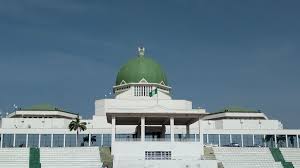
In this episode of The Other Side, Rimamnde Shawulu Kwewum examines a growing constitutional controversy surrounding Nigeria’s new tax regime. Allegations have emerged that the tax laws currently being implemented differ from the versions passed by the National Assembly, raising profound questions about legality, due process, and democratic accountability.

The issue came to public attention after a member of the House of Representatives alleged that the Acts gazetted and circulated by the executive arm contain provisions that were not approved by lawmakers. Rather than a transparent floor debate, the matter was referred to a committee that failed to conclude its work before parliamentary recess—leaving Nigerians governed by laws whose authenticity remains in dispute.

This episode breaks down how laws are meant to move from parliament to implementation: passage by both chambers, transmission, presidential assent, and official gazetting. Each step exists to prevent precisely this kind of ambiguity. When that chain is compromised, the rule of law itself is threatened.

Special focus is placed on the role of the Government Printer and tax authorities, and whether due diligence was followed before enforcement began. If laws were altered after assent, then implementation may be unconstitutional, with far-reaching implications for revenue collection, compliance, and investor confidence.

Beyond tax policy, this discussion exposes a deeper governance problem—weak institutional accountability and blurred lines of authority. If laws can change without parliamentary approval, then democratic oversight is reduced to a formality.

This episode is essential viewing for policymakers, lawyers, civil society, and citizens concerned about constitutional order and the future of Nigeria’s democracy.

Subscribe for weekly insights on Nigeria’s politics and democracy.
Latest

Faith Under Fire: The Story of Purpose, Sacrifice, and Survival in Nigeria’s Frontier Missions

In a world increasingly defined by planning, funding structures,...

The Parable of Nero of Nairaland, By Abdul Mahmud

There is a country called Nairaland. It appears on...

The Discipline of Power and the Question of State Police, By Abdul Mahmud

Power is often imagined as force. It is seen...

Remembering Murtala Muhammed,By Abdul Mahmud

On 13 February 1975, General Murtala Ramat Muhammed was...

Newsletter

spot_img

Don't miss

Faith Under Fire: The Story of Purpose, Sacrifice, and Survival in Nigeria’s Frontier Missions

In a world increasingly defined by planning, funding structures,...

The Parable of Nero of Nairaland, By Abdul Mahmud

There is a country called Nairaland. It appears on...

The Discipline of Power and the Question of State Police, By Abdul Mahmud

Power is often imagined as force. It is seen...

Remembering Murtala Muhammed,By Abdul Mahmud

On 13 February 1975, General Murtala Ramat Muhammed was...

When Nigeria Outsources Trust to Machines, By Rimamnde Shawulu Kwewum

Nigeria’s democracy is again at a familiar crossroads: the...
spot_imgspot_img

Faith Under Fire: The Story of Purpose, Sacrifice, and Survival in Nigeria’s Frontier Missions

In a world increasingly defined by planning, funding structures, and institutional backing, the story of Pastor Bitrus Audu stands in stark contrast. It is...

The Parable of Nero of Nairaland, By Abdul Mahmud

There is a country called Nairaland. It appears on maps drawn with generous imagination and studied with careful denial. In that country, bombs go...

The Discipline of Power and the Question of State Police, By Abdul Mahmud

Power is often imagined as force. It is seen as something loud and visible. A president signs a bill. A governor deploys security agents....
0 0 votes
Article Rating
Subscribe
Notify of
guest
0 Comments
Oldest
Newest Most Voted
Inline Feedbacks
View all comments
0
Would love your thoughts, please comment.x
()
x
