
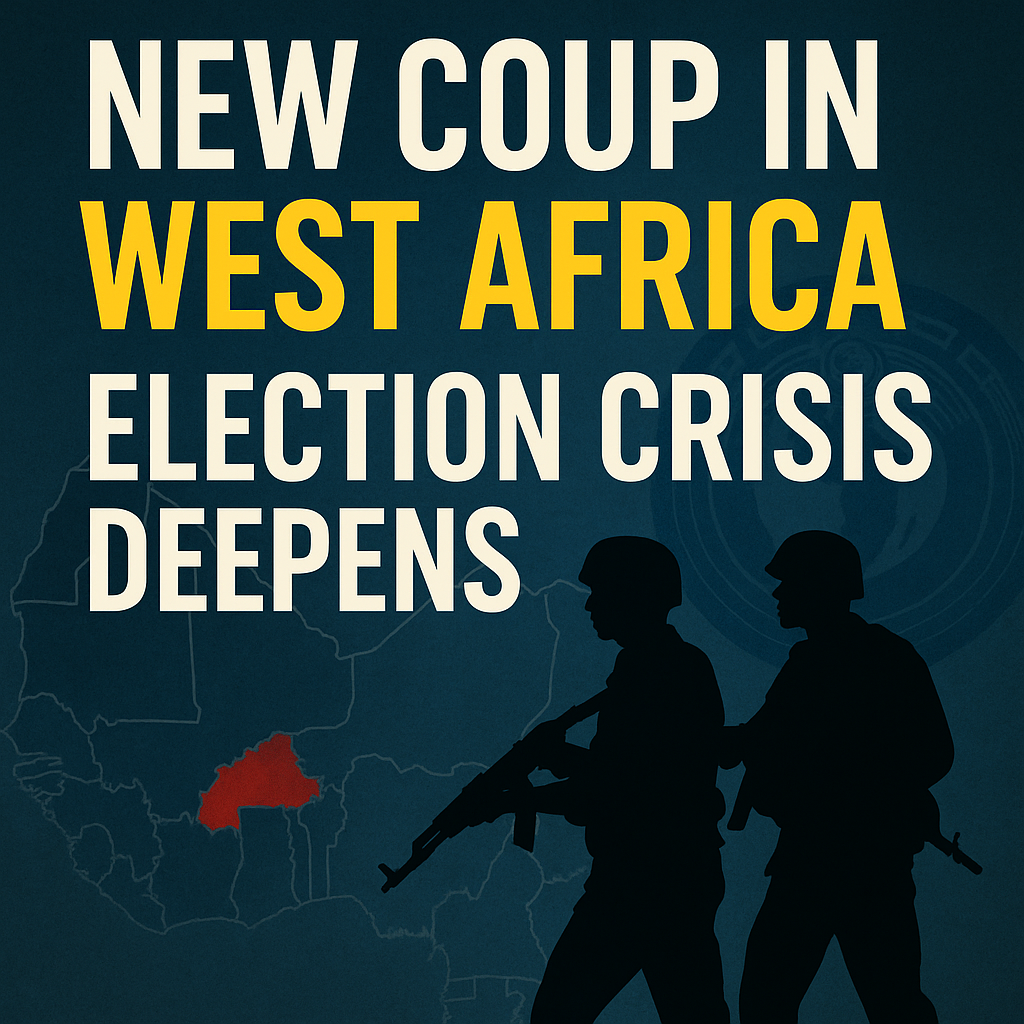
Africa has recorded yet another military takeover—this time in coup-prone Guinea-Bissau. In this week’s Security Update, Rimamnde Shawulu Kwewum breaks down the unfolding crisis, the actors behind it, and the implications for democracy across West Africa.
#SecurityUpdate #RimamndeShawulu #AfricaSecurity #NigeriaSecurity #GlobalConflicts #CoupInAfrica #WestAfricaPolitics #NationalSecurity
The coup followed a highly contested election between incumbent President Umaro Sissoco Embaló and leading challenger Fernando Díaz da Costa. As results were still being expected, senior military officers appeared on state television, announced the closure of borders, suspended the electoral process, and declared the installation of a High Military Command for the Restoration of Order.
The embattled president confirmed to international media that he had been arrested and deposed. As is typical in West Africa’s coup playbook, the junta immediately suspended parliament, restricted government activity, and imposed tight controls on the media.
This escalation comes against the backdrop of deep political dysfunction. President Embaló himself had dissolved parliament and prevented it from sitting for nearly two years, fueling unrest and accusations of authoritarian overreach. The Guardian, Reuters, and other global outlets report that drug-trafficking networks—which have turned Guinea-Bissau into a major narcotics transit hub to Europe—may be influencing both political and military elites.
Former Nigerian President Goodluck Jonathan and Mozambique’s Philipe Nyusi, who were in the country as election observers, have called for urgent ECOWAS and AU engagement. Portugal, the former colonial power, has condemned the coup and urged a return to the electoral process and protection of detainees.
Guinea-Bissau’s turbulent political history includes at least seven coups and attempted coups since 1980, with successful takeovers in 1980, 1999, and 2003. The country has long struggled with military factionalism, weak institutions, and elite conflict driven by drug-trade interests.
Regionally, this latest event adds to the wave of coups reshaping West Africa since 2020, including Mali, Burkina Faso, Guinea, Niger, and Gabon. Attempts to reverse these coups have weakened ECOWAS, leading to a legitimacy crisis and the withdrawal of several member states. Disillusionment with democracy—fueled by flawed elections, exclusion of opposition candidates, and weak governance—continues to deepen.
This edition of Security Update provides a clear, data-driven assessment of how failed political processes across Africa are driving instability, and what the latest coup means for the continent’s democratic trajectory.
📡 Subscribe to Security Update for verified weekly reports on Nigeria, Africa, and the world.