Boko Haram and ISWAP are not the same organisation—and they have operated as distinct, frequently hostile insurgent factions since their violent split in 2016.
Understanding the difference between Jama’atu Ahlis Sunna Lidda’awati wal-Jihad, or JAS, commonly associated with the Boko Haram name, and Islamic State West Africa Province, ISWAP, is essential to understanding why Nigeria’s northeastern insurgency has survived for more than fifteen years.
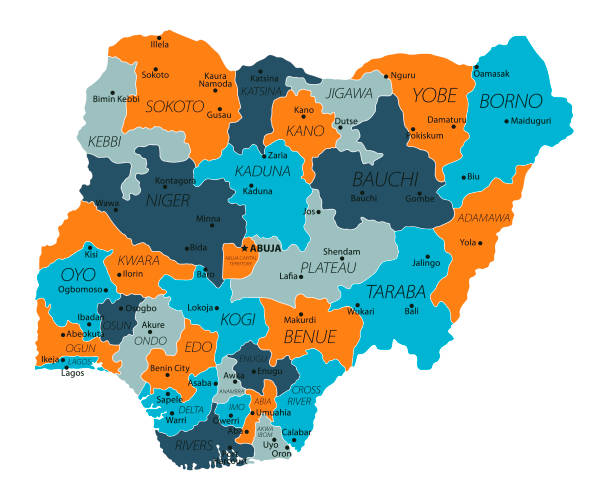
In this episode of Ndeya Live, Rimamnde Shawulu examines the origins of the split, the ideological dispute that drove it and the continuing struggle for fighters, territory and influence across Borno State, the Sambisa Forest and the Lake Chad Basin.
The division became public in August 2016, when the Islamic State announced Abu Musab al-Barnawi as the leader of its West Africa Province, effectively removing Abubakar Shekau. Shekau rejected the decision and released his own response, setting the stage for years of rivalry and bloodshed.
At the heart of their disagreement was takfir—the practice of declaring other Muslims unbelievers—and the treatment of Muslim civilians. ISWAP criticised Shekau’s indiscriminate violence against Muslim communities. It attempted to distinguish itself by concentrating attacks on military and government targets, imposing taxation and cultivating relationships with some communities. That approach, however, did not make ISWAP less dangerous: it has carried out killings, abductions, coercion and attacks on civilians and security forces.
This episode explains:
→ Why the Islamic State removed Shekau and backed al-Barnawi in 2016
→ How takfir and attacks on Muslim civilians drove the ideological rupture
→ The differences between JAS and ISWAP leadership and command structures
→ How both factions recruit, govern territory and interact with civilians
→ Why reconciliation efforts—including Bakura Doro’s overture to ISWAP—failed
→ How Shekau died during an ISWAP assault in May 2021
→ Why Shekau’s death weakened JAS but did not destroy it
→ How Bakura Doro helped rebuild the JAS faction around Lake Chad
→ What recent evidence of rivalry, negotiations and limited tactical accommodation means
→ What expanded Nigeria–United States operations against Islamic State-linked networks reveal about the changing conflict
The history is not simply a story of one terrorist organisation breaking into two. It is a struggle over religious doctrine, civilian populations, territory, taxation, smuggling routes, military strategy and control of the wider Lake Chad insurgency.
JAS and ISWAP have repeatedly fought each other, causing significant losses on both sides. At other moments, battlefield pressures and shared enemies have reportedly produced negotiations, temporary restraint or limited tactical accommodation. These shifting relationships make the conflict harder for governments and civilians to navigate.
Watch this Ndeya Live analysis for a clear, factual account of the Boko Haram–ISWAP split, the death of Abubakar Shekau, the rise of Abu Musab al-Barnawi and Bakura Doro, and the future of Nigeria’s counterterrorism campaign.
Subscribe to Ndeya Live for factual reporting and deeper analysis of Nigerian politics, security and the forces shaping the country beyond the headlines.
SOURCES AND FURTHER READING:
• International Crisis Group, “JAS vs. ISWAP: The War of the Boko Haram Splinters,” Briefing No. 196
• Institute for Security Studies analysis by Taiwo Adebayo
• The Soufan Center
• Jamestown Foundation analysis of JAS leadership after Shekau
• ACLED conflict methodology and event data
• HumAngle, “The Making and Unmaking of Abubakar Shekau”
• Statements and recordings from Abu Musab al-Barnawi and Abubakar Shekau, August 2016
• Contemporary reporting on Nigeria–United States counterterrorism operations
#BokoHaram #ISWAP #NigeriaSecurity #NigeriaAnalysis
#NdeyaLive #Shekau #alBarnawi #NigeriaInsecurity
#LakeChad #SambisakForest #IslamicState #WestAfrica
#NigeriaNews #Terrorism #The2027Race