
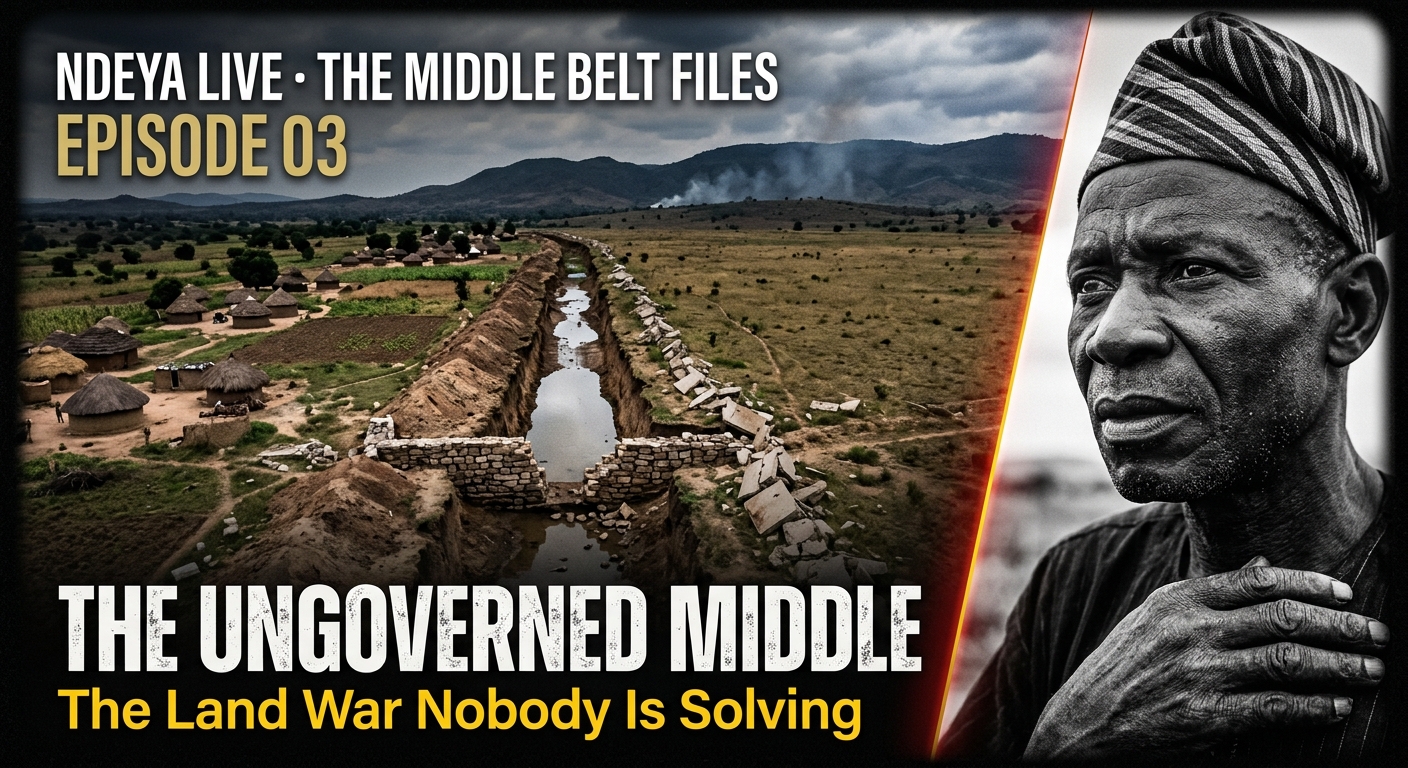
How does a cow walking into a farm turn into 50,000 deaths?
In Episode 03 of The Middle Belt Files, we go underneath Nigeria’s deadliest ongoing conflict to ask the questions most people aren’t asking. Why did this crisis escalate so sharply after 2015? What does Lake Chad’s collapse have to do with villages burning in Plateau State? And why are traditional Fulani herders not the same as the armed militias operating in the Middle Belt?
This episode does something rare: it listens to both sides. The farmers who have lost land, lives, and livelihoods. The herding communities whose traditional economy has been destroyed by climate change. And the armed actors — distinct from both — who have exploited this resource conflict for objectives that go far beyond grazing disputes.
We examine:
→ The pastoral economy: why herders move, and what changed when the Sahara expanded south
→ Lake Chad: 90% of its surface gone since the 1960s — and what that did to migration patterns
→ Libya’s collapse in 2011 and the weapons pipeline into the Sahel and Nigeria
→ The political shifts after 2014 that removed accountability for armed actors
→ The difference between Fulani communities and organised armed militias (and why it matters)
→ What has actually worked: the Riyom-Kaura peace agreement of December 2020
→ Benue State’s open grazing prohibition law — and why it needs federal backing to function Based on field research, UN documentation, academic literature, and on-the-ground reporting from the Middle Belt region.
SUBSCRIBE — new episode every Monday FULL PLAYLIST →
SOURCES & FURTHER READING:
• UNHCR / UN Human Security Unit — herder-farmer conflict documentation
• Ibrahim Galma, MACBAN, cited via UNHCR
• Jonathan Kyesmang, Mwaghavul Youth National Association (2025)
• Riyom-Kaura Peace Agreement, December 2020
• Benue State Open Grazing Prohibition Law, 2017
• Lake Chad Basin Commission — surface area data
#MiddleBeltFiles #NigeriaConflict #FarmerHerderConflict #NdeyaLive