
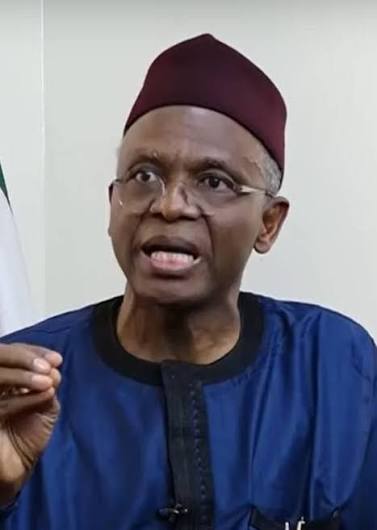
The legal battles involving former Kaduna State Governor Nasir Ahmad El-Rufai have raised questions extending beyond allegations of corruption and abuse of office. They have brought renewed attention to the relationship between political power, judicial independence and the future of opposition politics in Nigeria.
At the heart of the controversy is a fundamental question: Can the prosecution of a politically influential figure serve legitimate anti-corruption objectives while simultaneously producing political advantages for those in government?
For El-Rufai, whose career has been marked by administrative reforms, political confrontation and controversies over governance, the present challenges represent another defining moment.
For President Bola Ahmed Tinubu’s administration, the handling of the case could become an important test of its commitment to the rule of law.
And for Nigeria’s opposition parties, the controversy introduces another dimension to the contest for political influence ahead of the 2027 general elections.
The legal battles and questions of due process
El-Rufai has faced allegations involving corruption, abuse of office and other alleged offences. The proceedings discussed in The Other Side include matters involving the Independent Corrupt Practices and Other Related Offences Commission (ICPC) and the Department of State Services (DSS).
The allegations, his defence and disputes concerning detention and bail have generated substantial political debate.
El-Rufai has challenged the allegations against him, while questions have been raised about whether the legal proceedings are being influenced by political considerations.
However, political allegations and criminal charges must be carefully distinguished.
An accusation does not amount to a conviction. Equally, the political prominence of an accused person does not provide immunity from investigation or prosecution.
The central requirement is that the proceedings must be conducted transparently, independently and in accordance with established legal procedures.
Nigeria’s anti-corruption institutions must be capable of investigating powerful political figures without fear or favour. But they must also be seen to operate without political discrimination.
That distinction is essential to maintaining public confidence in the justice system.
El-Rufai’s controversial political record
Any assessment of El-Rufai’s current political circumstances must consider his record in public office.
As Minister of the Federal Capital Territory under President Olusegun Obasanjo, El-Rufai became nationally prominent through an aggressive urban development and demolition programme.
Supporters regarded him as an administrator willing to confront entrenched interests and enforce planning regulations.
Critics questioned the social consequences of his policies, particularly for residents and businesses affected by demolitions.
His governorship of Kaduna State from 2015 to 2023 produced similarly divided opinions.
His administration introduced reforms affecting public education, the civil service and local governance. These policies attracted both praise and criticism.
At the same time, Kaduna experienced serious security challenges, including attacks on rural communities, kidnappings and recurring violence in Southern Kaduna.
The December 2015 confrontation between soldiers and members of the Islamic Movement in Nigeria in Zaria remains among the most controversial events associated with the period.
El-Rufai’s political decisions, including the choice of a Muslim-Muslim governorship ticket in a religiously diverse state, also generated considerable public debate.
Another unresolved controversy concerns the disappearance of government critic Abubakar Idris, popularly known as Dadiyata. Public debate surrounding that case has included allegations and counterclaims, but responsibility for the disappearance has not been judicially established.
These issues form an important part of El-Rufai’s political legacy.
Consequently, the present legal controversy should not erase legitimate questions about his previous performance in office.
Neither should criticism of his administration become a justification for denying him the legal protections available to every Nigerian citizen.
From Tinubu’s political ally to opposition figure
El-Rufai played a prominent role in the political coalition that supported Bola Ahmed Tinubu’s emergence as President in the 2023 elections.
As a former governor and influential figure in Northern politics, he was regarded as an important participant in the APC’s political calculations.
However, the relationship between the two political figures subsequently deteriorated.
El-Rufai’s unsuccessful ministerial nomination became an important turning point in that relationship.
His changing political alignment has since contributed to speculation about his potential role in opposition mobilisation ahead of the next general elections.
Against this background, his legal difficulties have acquired wider political significance.
Some observers regard the proceedings as an opportunity for anti-corruption institutions to demonstrate that powerful former public officials can be held accountable.
Others question whether the circumstances surrounding the cases could affect opposition organisation and political competition.
Both interpretations require careful evaluation.
The existence of a political rivalry does not, by itself, prove that a criminal prosecution is politically motivated.
Similarly, the existence of criminal allegations does not eliminate the need to examine whether state institutions are acting independently.
Who benefits politically?
The implications of the El-Rufai controversy may extend beyond the eventual legal outcome.
For the Tinubu administration, a credible, evidence-based prosecution could reinforce its stated commitment to accountability.
However, if the proceedings become associated with political interference or procedural irregularities, they could damage public confidence in the government’s commitment to democratic principles.
For the opposition, El-Rufai’s legal difficulties present both challenges and opportunities.
His diminished ability to participate directly in political activities could affect opposition organisation, particularly in Northern Nigeria.
On the other hand, prolonged legal controversy could strengthen perceptions among some opposition supporters that the political environment is unequal.
Whether such perceptions translate into electoral support remains uncertain.
For El-Rufai personally, the stakes extend beyond his legal defence.
The controversy could influence his political reputation, his relationships with other opposition leaders and his future participation in national politics.
What does this mean for 2027?
Northern Nigeria is expected to remain central to the political calculations of both the governing APC and opposition parties in the 2027 presidential election.
The region’s population, electoral history and political alliances make it important to any credible national presidential campaign.
El-Rufai’s political experience and relationships could give him a role in those calculations.
Nevertheless, the assumption that his legal difficulties will automatically strengthen or weaken a particular political camp would be premature.
Electoral outcomes will depend on several factors, including party organisation, candidate selection, regional alliances, voter turnout and public assessments of the government’s performance.
The El-Rufai controversy may shape some of these dynamics, but it cannot determine them in isolation.
A wider test for Nigerian democracy
Beyond the personalities involved, the controversy highlights a continuing challenge in Nigerian governance: the need to establish public institutions that are independent of political interests.
A functioning democracy must be able to investigate and prosecute former public officials where credible evidence warrants legal action.
At the same time, the criminal justice system must protect the constitutional rights of accused persons regardless of their political affiliations.
These obligations are complementary.
The right to due process does not excuse corruption.
The pursuit of accountability does not justify political persecution.
Nigeria’s democratic development depends partly on its ability to maintain both principles consistently.
The broader significance also extends to other African democracies, where the relationship between criminal prosecution, political opposition and institutional independence remains a recurring concern.
Conclusion: Justice must be stronger than politics
The questions surrounding Nasir El-Rufai cannot be resolved merely through political loyalties.
His supporters cannot establish his innocence by describing the proceedings as political persecution.
His critics cannot establish his guilt by referring to controversies from his previous years in government.
Ultimately, criminal liability must be determined by the courts through evidence and due process.
But the political significance of the controversy remains a legitimate subject for public examination.
As Nigeria approaches the 2027 elections, the larger question is whether its democratic institutions can demonstrate that justice is independent of political advantage.
That is the real test: not simply what happens to El-Rufai, but whether the institutions handling his case strengthen or weaken public confidence in the rule of law.
This article is adapted from an episode of The Other Side, an Ndeya Live political analysis programme presented by Rimamnde Shawulu Kwewum.
Watch the full episode: https://youtu.be/aJHPAhYDUcw?si=McpmxPiD1ByFVmcl