
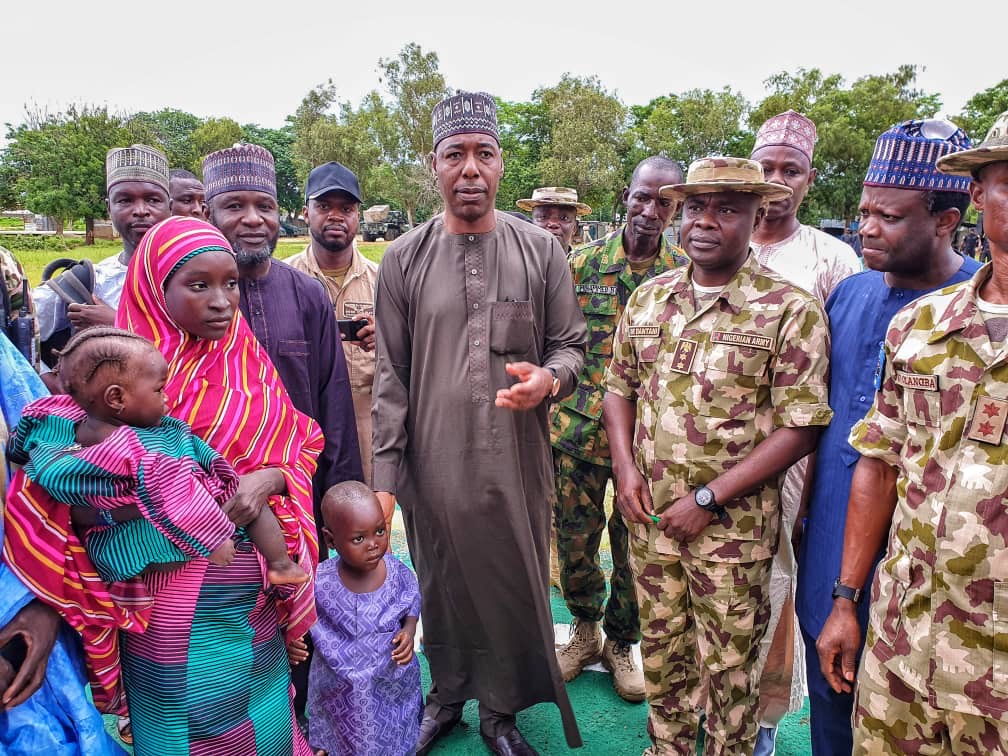
On 15 May 2026, gunmen attacked schools in two parts of Nigeria. In Oriire Local Government Area of Oyo State, attackers abducted 46 pupils and teachers from three schools. In Mussa, a community in Askira-Uba Local Government Area of Borno State on the fringe of the Sambisa Forest, suspected insurgents abducted children from Mussa Primary and Junior Secondary School and nearby homes.
Fifty-six days later, on 10 July, the federal government announced that security forces had rescued 44 of the Oyo abductees. The Army described the rescue as an intelligence-led operation by several agencies. In Borno, families were still waiting.
On 29 June, 45 days after Mussa, gunmen attacked Government Day Secondary School in Lassa, about 20 kilometres away, while students were sitting National Examinations Council papers. Some abductees escaped or were recovered soon afterwards, but 36 students and a teacher remained missing.
Even the number taken from Mussa is disputed. A register obtained by Premium Times listed 40 missing children, and other accounts said 42. The Emir of Uba described 43 students and five other residents. Government statements referred to about 44, and Reuters later cited around 45. By September, officials put the total missing from both communities at roughly 80. No reconciled list has been made public.
The Lassa attack also raises questions about prevention. On 25 May, a Borno State delegation led by Education Commissioner Lawan Wakilbe visited Mussa, Dille and Lassa. The government announced Safe Schools measures for the affected schools, and 35 days later Lassa was attacked. The Askira-Uba education secretary told Premium Times that the Safe Schools programme was not operating in the affected schools, and the paper could not establish what protection had been put in place at Lassa. Authorities have said that soldiers and vigilantes were deployed in the area.
The risks had already been raised. In February 2024, the House of Representatives debated a motion by Midala Balami, the member for Askira-Uba/Hawul, on insecurity in Mussa, Lassa and neighbouring communities. In October that year, it returned to the dangers facing students sitting national examinations.
Governor Babagana Zulum visited the affected families and committed the state to securing the children’s release. President Bola Tinubu directed security agencies to intensify efforts. After an October meeting with the President, Zulum spoke of commitments involving the Army, the State Security Service and the Office of the National Security Adviser. What has not been made public is evidence of results: whether the abductors have been identified, whether there have been arrests, how often parents are briefed, and which agency leads the response.
The families’ situation has grown worse. Parents protested in Uba in August, and in September they threatened to take their demands to the Presidential Villa. In October, Daily Trust reported that they had postponed the journey because they could not afford transport fares while feeding the dependants they would leave at home.
Schooling in the area has also suffered. In Askira-Uba, 76 of 113 primary schools were functioning before the Mussa attack. Afterwards, the number fell to 56.
The Oyo rescue showed that recovery is possible under the right conditions. The families of Mussa and Lassa are entitled to an authoritative account of what is being done to bring their children home.
Rimamnde Shawulu is the host of The Other Side on Ndeya Live, which provides analysis of Nigerian politics, security and governance, and the author of The Middle Belt.