A new episode of The Middle Belt Files reads the warnings, reports and letters at the centre of Nigeria’s genocide debate, sets them against the strongest counter-arguments, and finds one point on which almost everyone agrees.
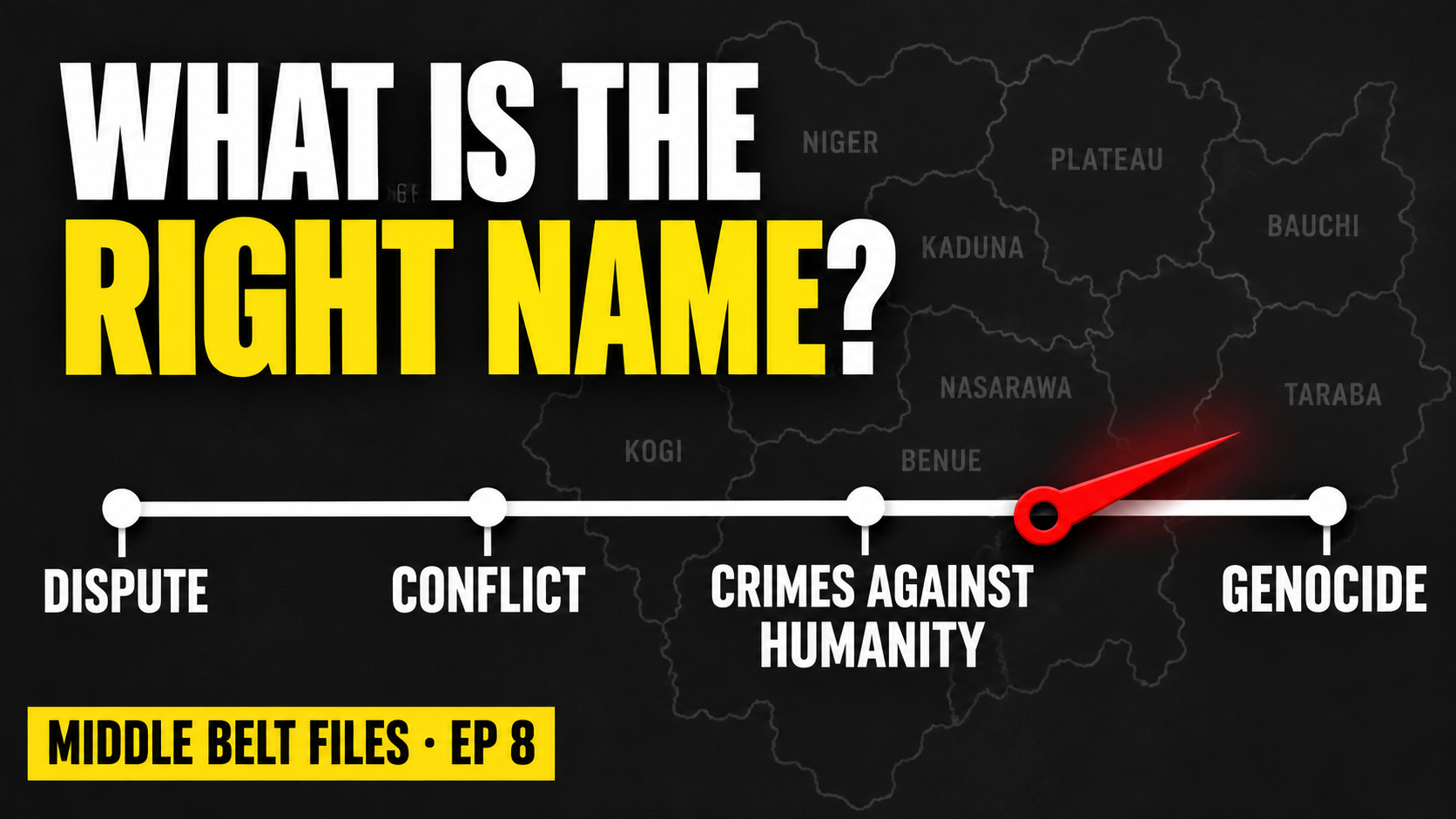
How should the killings in Nigeria’s Middle Belt be classified? The answer matters, because the name determines the response. A land dispute calls for mediation, a resource conflict for policy, and crimes against humanity for prosecution. Genocide calls for the most urgent response that international law provides.
In the eighth episode of The Middle Belt Files on Ndeya Live, Rimamnde Shawulu examines the primary documents behind the debate and says he will not deliver a verdict.
The first document is a genocide warning issued by the Swiss-based Christian Solidarity International in January 2020. Such a warning is a risk-escalation tool, not a finding that genocide has occurred. In June 2020, the UK All-Party Parliamentary Group for International Freedom of Religion or Belief published Nigeria: Unfolding Genocide? The report made no legal determination, but it described a pattern of violence against predominantly Christian communities and impunity for the perpetrators.
In the United States, the Commission on International Religious Freedom has recommended since 2009 that Nigeria be designated a Country of Particular Concern. President Donald Trump made that designation on 31 October 2025.
In a letter dated 2 November 2025, the Global Coalition for Freedom of Religion in Nigeria urged Senate President Godswill Akpabio and Speaker Tajudeen Abbas to investigate the allegations rather than send a delegation to Washington to dispute them. The coalition also questioned official claims that more Muslims than Christians had been killed, noting that Nigeria’s census has not recorded religion for decades.
The episode then turns to international criminal law. Genocide requires proof of intent to destroy a group, which is the hardest element to establish. Crimes against humanity require proof of a widespread or systematic attack on civilians. An article published by the International Bar Association in June 2026 argues that the Middle Belt violence meets that threshold, and in specific cases the threshold for genocide. It says the existing evidence is enough to open an investigation. In December 2020, the International Criminal Court’s then Prosecutor concluded that the criteria for an investigation in Nigeria had been met. No investigation has been opened.
The programme gives significant time to counter-arguments. Conflict data show many perpetrators, including Fulani militias, Tiv and Berom militias, criminal gangs and state forces. Researchers including Marc-Antoine Pérouse de Montclos and the International Crisis Group argue that a genocide frame can overstate intent and make negotiated solutions harder. In the North West, Fulani bandits have killed thousands of Hausa Muslim farmers.
Shawulu argues that these disagreements concern framing and causation, not the scale of death and displacement or the absence of accountability. He cites the killing of evangelist Eunice Olawale in Abuja in 2016 and the lynching of student Deborah Samuel in Sokoto in 2022. In neither case has anyone been convicted.
One year after the coalition sent 11 legislative demands to the National Assembly, the episode reports, no hearing on religious freedom has been held and no blasphemy law has been voided. Leah Sharibu, abducted from Dapchi in 2018, remains in captivity.
Rimamnde Shawulu is the host of Ndeya Live, which provides analysis of Nigerian politics, security and governance, and the author of The Middle Belt.
📺 Watch the full episode: https://youtu.be/kpuAuDquIYY?si=m8rUFN5UKD4VQR3d
📘 Read The Middle Belt on Amazon: https://www.amazon.com/gp/product/B08BF2PNR7/ref=ewc_pr_img_2?smid=ATVPDKIKX0DER&th=1