
HomeSecurity UpdatePolice Denials of ...

Police Denials of Abductions of 160 during Church service Triggers Security Credibility Crisis

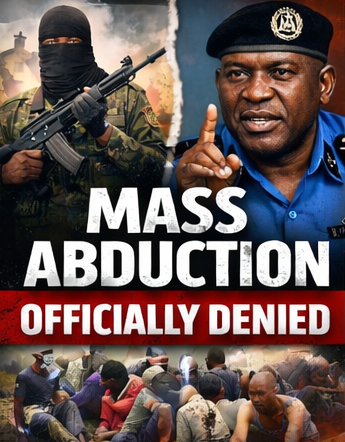
The most critical domestic security concern this week centers on Kaduna State, where reports emerged of a coordinated mass abduction targeting Christian worshippers in Kurmin Waje village, Afogo Ward, Kajuru Local Government Area. According to eyewitnesses and local representatives, heavily armed attackers stormed three churches during Sunday services and abducted congregants into nearby forests.

Initial reports indicated that up to 177 people were taken from the Evangelical Church Winning All (ECWA) church and two Cherubim and Seraphim churches. Some elderly captives and persons living with disabilities were later released, while a small number reportedly escaped. Even with these releases, the scale of the incident was described by a member of the Kaduna State House of Assembly as unprecedented in the area.

Eyewitness accounts described the attackers as arriving around mid-morning, armed and organized, some wearing black clothing and others dressed in what appeared to be military camouflage. The abductors allegedly split into groups, targeting multiple churches simultaneously — a tactic that suggests planning and familiarity with the terrain.

However, within 24 hours, the Kaduna State Police Command publicly denied that any kidnapping had occurred. The Commissioner of Police dismissed the reports as falsehoods allegedly spread by “conflict entrepreneurs,” challenged the public to produce a list of victims, and warned against what he described as rumor-mongering capable of destabilizing the state. The chairman of Kajuru Local Government echoed this denial, stating that visits to the community revealed no evidence of an attack.

This sharp contradiction — between eyewitness testimony, local legislators, and official security statements — has become a defining feature of Nigeria’s recent security landscape.

CIVIL SOCIETY AND ACCESS RESTRICTIONS

Adding another layer to the controversy, Christian Solidarity Worldwide Nigeria (CSWN) reported that its team attempted to access Kurmin Waje to independently verify events but was stopped by military personnel enforcing standing orders not to allow entry. According to CSWN, the denial of access occurred shortly after a military convoy, reportedly including local government officials, exited the community.

CSWN maintains that attackers arrived on motorcycles and on foot, abducted worshippers from three churches, and forced them into surrounding bush areas. The organization reported that women, children, and elderly individuals were later released, while others escaped during the chaos.

These restrictions on independent verification have deepened suspicions and intensified concerns about transparency, accountability, and information control during security crises.

NIGER STATE: A PATTERN EMERGES

The Kaduna controversy follows a similar episode in Niger State, where authorities initially denied reports of the mass kidnapping of hundreds of Catholic students. That denial was later reversed when the same government publicly received the freed students, raising fundamental questions about why the incident was dismissed in the first place.

Together, these cases point to a recurring pattern: denial first, admission later, often under public pressure.

STRATEGIC AND HUMANITARIAN IMPLICATIONS

From a security perspective, mass kidnappings conducted in coordinated fashion indicate growing operational confidence among armed groups. From a governance standpoint, repeated denials risk doing lasting damage. When communities believe that authorities are concealing attacks, cooperation with security agencies diminishes, intelligence dries up, and trust collapses.

At the humanitarian level, families of abducted persons are left in uncertainty, while displaced and traumatized communities lose faith in institutions meant to protect them. Internationally, credibility gaps weaken Nigeria’s position as it seeks global support on security, counter-terrorism, and humanitarian relief.

WHY THIS MATTERS

Whether ongoing investigations ultimately confirm or disprove the full scale of the Kaduna incident, the damage caused by contradictory official messaging is already real. Security is not only about military response; it is also about truth, credibility, and public confidence.

As Nigeria remains under increased international scrutiny, the handling of security information may prove as consequential as the attacks themselves.

Follow the Ndeya Live channel on WhatsApp: https://whatsapp.com/channel/0029Vb75hKu8qIzpCZasbb2Q

Subscribe to Security Update for verified weekly reports on Nigeria, Africa, and the world.

- Books by Rimamnde Shawulu -

spot_img

Most Popular

0 0 votes
Article Rating
Subscribe
Notify of
guest

0 Comments
Oldest
Newest Most Voted

More from Author

- Books by Rimamnde Shawulu -

spot_img

Read Now

Genocide, Crimes Against Humanity or Conflict? What the Documents on Nigeria’s Middle Belt Actually Say

A new episode of The Middle Belt Files reads the warnings, reports and letters at the centre of Nigeria's genocide debate, sets them against the strongest counter-arguments, and finds one point on which almost everyone agrees. How should the killings in Nigeria's Middle Belt be classified? The answer...

Missing Borno Schoolchildren: Six Months On, Mussa and Lassa Families Still Waiting

On 15 May 2026, gunmen attacked schools in two parts of Nigeria. In Oriire Local Government Area of Oyo State, attackers abducted 46 pupils and teachers from three schools. In Mussa, a community in Askira-Uba Local Government Area of Borno State on the fringe of the Sambisa...

State Police Bill on Tinubu’s Desk: Who Pays, Who Controls, and Who Takes the Call?

Nigeria is one presidential signature away from reversing a decision its military government made 60 years ago. The National Assembly transmitted the constitutional amendment establishing state police services to President Bola Tinubu for assent on 4 November. By then, between 29 and 30 state houses of assembly had...

Bandits Demand ₦100m for 14 Abducted Pupils as Attacks Hit Zamfara, Kaduna and Plateau

Fourteen pupils of an Islamiyya school abducted from a farm in Niger State remained in captivity at the end of a week that also saw eight security personnel killed in Zamfara and up to 20 villagers abducted in Kaduna, according to Ndeya Live's weekly Nigeria and Sahel...

Atiku’s ADC Ticket Voided a Day After Sokoto Launch as Opposition Questions the Courts

A court ruling, a contested voter register, an attack on Obi's convoy and APGA's move behind Tinubu made for one of the most consequential weeks of the 2027 campaign. A Federal High Court in Abuja has nullified Atiku Abubakar's presidential candidacy on the platform of the African Democratic...

Minna Detention Deaths: Panel Finds Suffocation, Not Disease, but No Officer Charged Yet

33 Dead in Civil Defence Custody: What the Minna Panel Found, and What Comes Next Standfirst: The federal investigative committee says the deaths of detainees held after raids on suspected illegal miners were entirely preventable. Weeks after its report, the question of criminal accountability remains open. A federal...

157 Civilians Killed in 10 Days as ISWAP Loses Foreign Fighters, Shura Council Member in Borno 

Taraba Massacre, Niger State Abductions and 34 Foreigners Arrested in Benue Standfirst: The military made significant counter-terrorism gains between 25 October and 3 November, but attacks on civilians continued across the North East, North West and North Central. At least 157 civilians were killed across Nigeria between 25...

From 10 to 62: Binnari and the Cost of Counting Late

On Friday, 23 October, gunmen entered Binnari, a river market town in Karim Lamido Local Government Area of Taraba State, shortly after Jumu'ah prayers on market day. Houses were burned and goods looted. Residents ran for the Benue River and the canoes that link the town to...

The Middle Belt’s Empty Villages Need Counting, Not Slogans

Lydia Ingev was 49 when she fled Tse Tokula, a farming village in Guma, Benue State, one night in 2014. She had already lost her husband and three sons to the killings. She took 12 dependents to a displacement camp in Daudu. She is 60 now, and...

Nigeria’s Deadliest Security Week: 15 Troops Killed, Child Murdered After Ransom Paid

Armed groups struck across six states between 18 and 24 October, killing at least 32 confirmed civilians and security personnel and exposing the limits of federal counter-insurgency strategy. ABUJA, 25 October 2026 — Fifteen Nigerian soldiers and Civilian Joint Task Force members were killed in a single Islamic...

The Middle Belt’s Hidden Crises: What  The  Death Toll Isn’t Telling You

More than 50,000 people have died in Nigeria’s Middle Belt since 2011. In several of those years, the death toll exceeded Boko Haram’s. And yet the crisis has never triggered a federal emergency declaration, a dedicated reconstruction body, or a completed criminal prosecution for any of the...

El-Rufai: Justice, Politics and the Battle for 2027

The legal battles involving former Kaduna State Governor Nasir Ahmad El-Rufai have raised questions extending beyond allegations of corruption and abuse of office. They have brought renewed attention to the relationship between political power, judicial independence and the future of opposition politics in Nigeria. At the heart of...
