
HomeMajalisahWhy Nigeria Rushed to...

Why Nigeria Rushed to Crush Benin’s Coup but Not Bandits at Home – Dr Joel kemie on Majalisah

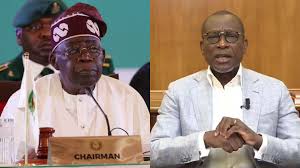
In this powerful episode of Majalisa, host Rimamnde Shawulu Kwewum sits down with political scientist Dr. Joel kemie, speaking from Portugal, to unpack the dramatic attempted coup in the Benin Republic – and what Nigeria’s “swift response” reveals about power, insecurity, and geopolitics in West Africa.

On 7 December, a faction of Benin’s National Guard and officers styling themselves the Military Committee for Refoundation (CMR) attempted to overthrow President Patrice Talon. Led by Lt. Col. Pascal Tigri, they reportedly attacked the president’s residential area in Cotonou, seized the state broadcaster (SRTB), went on air to announce Talon’s removal, suspended the constitution, dissolved institutions, and closed borders.

Within hours, the Beninois authorities called for help. According to official claims, Nigeria deployed fighter jets and special forces, helped bomb and chase out the coup plotters, and restored Talon’s government. Reports later emerged that Tigri’s wife was injured and his daughter killed in the operation.

Dr. Ikemi argues that this intervention raises three big questions.

First is the sovereignty debate. He contrasts Nigerian elites’ loud opposition to talk of U.S. intervention – including recent statements about “Christian genocide in Nigeria” – with their apparent comfort in sending jets across the border to crush a coup in Benin. If foreign intervention is unacceptable in Nigeria, why is Nigerian intervention in a neighbour suddenly legitimate?

Second is the idea of “swift response”. Dr. Ikemi notes that the same state that can mobilise jets and troops in hours for Benin has failed to act decisively against bandits, Boko Haram, ISWAP, kidnappers and jihadist networks at home. He points to years of mass abductions, daily killings, negotiations with bandits, and accusations of sabotage within the security system. Despite huge security budgets – running into trillions of naira – insecurity appears to have become a lucrative political economy rather than a problem to be solved.

Third is the geopolitics and jihadist threat. The conversation explores France’s influence in Francophone West Africa, Nigeria’s fear of the “contagious effect” of coups, and the porous Nigeria–Benin border. Dr. Ikemi links the presence of Al-Qaeda–linked JNIM in northern Benin and their claimed attacks in Nigeria to Abuja’s desire to prevent both a military takeover and a deeper jihadist foothold along its western frontier. He also makes the controversial case that jihadist activities in Nigeria are tied to attempts to reshape power and religious dominance within the federation.

Throughout the episode, Majalisa digs into whether insecurity has become a bargaining chip for power-grabbing in Nigeria, how pre-election patterns of violence shape outcomes, and why more Nigerians are now openly asking for external help against bandits and terrorists.

If you care about Nigeria’s security crisis, coup waves in West Africa, France’s role in the region, and the future of democracy and 2027 politics, this is a conversation you cannot afford to miss.

Share your thoughts and subscribe for more deep political dialogues on Majalisah

https://www.youtube.com/channel/UC0F3fBLsmMzNsCjtyDcT1rQ.

- Books by Rimamnde Shawulu -

spot_img

Most Popular

0 0 votes
Article Rating
Subscribe
Notify of
guest

0 Comments
Oldest
Newest Most Voted

More from Author

- Books by Rimamnde Shawulu -

spot_img

Read Now

Genocide, Crimes Against Humanity or Conflict? What the Documents on Nigeria’s Middle Belt Actually Say

A new episode of The Middle Belt Files reads the warnings, reports and letters at the centre of Nigeria's genocide debate, sets them against the strongest counter-arguments, and finds one point on which almost everyone agrees. How should the killings in Nigeria's Middle Belt be classified? The answer...

Missing Borno Schoolchildren: Six Months On, Mussa and Lassa Families Still Waiting

On 15 May 2026, gunmen attacked schools in two parts of Nigeria. In Oriire Local Government Area of Oyo State, attackers abducted 46 pupils and teachers from three schools. In Mussa, a community in Askira-Uba Local Government Area of Borno State on the fringe of the Sambisa...

State Police Bill on Tinubu’s Desk: Who Pays, Who Controls, and Who Takes the Call?

Nigeria is one presidential signature away from reversing a decision its military government made 60 years ago. The National Assembly transmitted the constitutional amendment establishing state police services to President Bola Tinubu for assent on 4 November. By then, between 29 and 30 state houses of assembly had...

Bandits Demand ₦100m for 14 Abducted Pupils as Attacks Hit Zamfara, Kaduna and Plateau

Fourteen pupils of an Islamiyya school abducted from a farm in Niger State remained in captivity at the end of a week that also saw eight security personnel killed in Zamfara and up to 20 villagers abducted in Kaduna, according to Ndeya Live's weekly Nigeria and Sahel...

Atiku’s ADC Ticket Voided a Day After Sokoto Launch as Opposition Questions the Courts

A court ruling, a contested voter register, an attack on Obi's convoy and APGA's move behind Tinubu made for one of the most consequential weeks of the 2027 campaign. A Federal High Court in Abuja has nullified Atiku Abubakar's presidential candidacy on the platform of the African Democratic...

Minna Detention Deaths: Panel Finds Suffocation, Not Disease, but No Officer Charged Yet

33 Dead in Civil Defence Custody: What the Minna Panel Found, and What Comes Next Standfirst: The federal investigative committee says the deaths of detainees held after raids on suspected illegal miners were entirely preventable. Weeks after its report, the question of criminal accountability remains open. A federal...

157 Civilians Killed in 10 Days as ISWAP Loses Foreign Fighters, Shura Council Member in Borno 

Taraba Massacre, Niger State Abductions and 34 Foreigners Arrested in Benue Standfirst: The military made significant counter-terrorism gains between 25 October and 3 November, but attacks on civilians continued across the North East, North West and North Central. At least 157 civilians were killed across Nigeria between 25...

From 10 to 62: Binnari and the Cost of Counting Late

On Friday, 23 October, gunmen entered Binnari, a river market town in Karim Lamido Local Government Area of Taraba State, shortly after Jumu'ah prayers on market day. Houses were burned and goods looted. Residents ran for the Benue River and the canoes that link the town to...

The Middle Belt’s Empty Villages Need Counting, Not Slogans

Lydia Ingev was 49 when she fled Tse Tokula, a farming village in Guma, Benue State, one night in 2014. She had already lost her husband and three sons to the killings. She took 12 dependents to a displacement camp in Daudu. She is 60 now, and...

Nigeria’s Deadliest Security Week: 15 Troops Killed, Child Murdered After Ransom Paid

Armed groups struck across six states between 18 and 24 October, killing at least 32 confirmed civilians and security personnel and exposing the limits of federal counter-insurgency strategy. ABUJA, 25 October 2026 — Fifteen Nigerian soldiers and Civilian Joint Task Force members were killed in a single Islamic...

The Middle Belt’s Hidden Crises: What  The  Death Toll Isn’t Telling You

More than 50,000 people have died in Nigeria’s Middle Belt since 2011. In several of those years, the death toll exceeded Boko Haram’s. And yet the crisis has never triggered a federal emergency declaration, a dedicated reconstruction body, or a completed criminal prosecution for any of the...

El-Rufai: Justice, Politics and the Battle for 2027

The legal battles involving former Kaduna State Governor Nasir Ahmad El-Rufai have raised questions extending beyond allegations of corruption and abuse of office. They have brought renewed attention to the relationship between political power, judicial independence and the future of opposition politics in Nigeria. At the heart of...
