
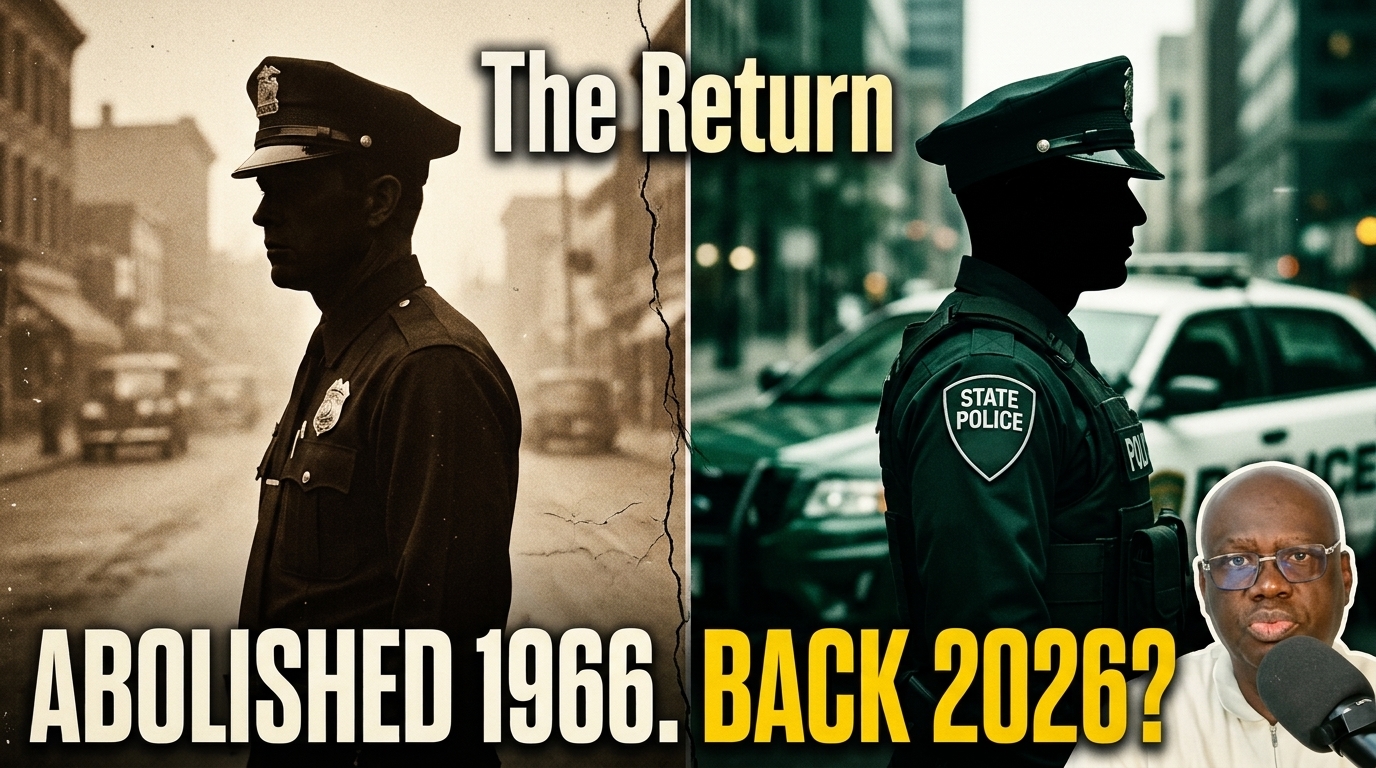
State Police Bill on Tinubu’s Desk: Who Pays, Who Controls, and Who Takes the Call?

Nigeria is one presidential signature away from reversing a decision its military government made 60 years ago.

The National Assembly transmitted the constitutional amendment establishing state police services to President Bola Tinubu for assent on 4 November. By then, between 29 and 30 state houses of assembly had approved it, according to the National Assembly; published reports differ on the exact figure. That is well above the 24 states, two-thirds of 36, that the constitution requires. The Senate gave the six assemblies that had not yet responded, among them Kano and Abia, until Sunday, 15 November. As of Saturday morning, no assent had been reported.

How Nigeria got one police force

Nigerian policing began as several colonial forces, from the Hausa Constabulary of 1879 to the Lagos police of 1896, which were merged into the Nigeria Police Force in 1930. Even then, much day-to-day policing was carried out by the native authority police in the North and local government police in the South. During the First Republic, those forces were accused of being used against political opponents. After the January 1966 coup, the Aguiyi-Ironsi government set up the Gobir panel, which recommended abolishing them. Policing was centralised and stayed that way under military rule.

The 1999 Constitution fixed that arrangement in Section 214: there shall be a Nigeria Police Force, and “no other police force shall be established for the Federation or any part thereof.” For 27 years, governors have been called chief security officers of their states without commanding a single police officer. That gap produced Amotekun, Ebube Agu and the Hisbah boards.

What the bill does

The amendment creates a federal police service and allows, but does not require, each state to create its own. State police would handle domestic public safety. Federal police would keep exclusive jurisdiction over national security, terrorism and cybercrime.

The governor appoints the head of a state service on the recommendation of the National Police Council, subject to confirmation by the State House of Assembly. The Senate’s version calls the post Commander of Police. Removal requires a stated cause, a fair hearing and a two-thirds vote of the assembly. The President may take temporary operational command of a state service if public order breaks down, if the state cannot run it, or if it is used to abuse rights or intimidate opponents. The order is subject to Senate validation and judicial review.

What it does not settle

No state police officer will be on the street soon. Each state needs its own enabling law, and the National Policing Bill, which is meant to set out recruitment, training and funding, is still pending.

Funding is the hardest question. A force of around 500 officers per local government area would mean about 4,000 officers for Bayelsa, with only eight LGAs. Several states already struggle to pay salaries and pensions. The framework envisages federal grants, but if Abuja pays, how “state” is the police?

Jurisdiction is the second problem. When bandits attack a village in Karim Lamido, Taraba State, is that public safety or terrorism? Nigeria’s insecurity does not sort neatly into federal and state categories.

The third is accountability. Since 1999, state assemblies have rarely checked governors. SBM Intelligence warns that handing governors coercive powers months before governorship polls risks creating an “incumbency protection mechanism.” The federal override also cuts the other way: it gives Abuja a lever over states.

The final question is capacity. The hope is that state police will hold territory the military clears, a role the federal police has largely failed to fill. Little in the bill shows where that capacity will come from.

Sixty years after the Gobir panel, Nigeria is set to bring back a version of what it abolished, this time with written safeguards. Whether those safeguards hold during governorship season is the test still to come.

This report draws on Ndeya Live’s analysis of the state police amendment. Watch the full episode:https://youtu.be/N1bxg9-3oo8?si=3boOKGJpQzizBzBS


- Books by Rimamnde Shawulu -

spot_img

Most Popular

0 0 votes
Article Rating
Subscribe
Notify of
guest

0 Comments
Oldest
Newest Most Voted

More from Author

- Books by Rimamnde Shawulu -

spot_img

Read Now

Bandits Demand ₦100m for 14 Abducted Pupils as Attacks Hit Zamfara, Kaduna and Plateau

Fourteen pupils of an Islamiyya school abducted from a farm in Niger State remained in captivity at the end of a week that also saw eight security personnel killed in Zamfara and up to 20 villagers abducted in Kaduna, according to Ndeya Live's weekly Nigeria and Sahel...

Atiku’s ADC Ticket Voided a Day After Sokoto Launch as Opposition Questions the Courts

A court ruling, a contested voter register, an attack on Obi's convoy and APGA's move behind Tinubu made for one of the most consequential weeks of the 2027 campaign. A Federal High Court in Abuja has nullified Atiku Abubakar's presidential candidacy on the platform of the African Democratic...

Minna Detention Deaths: Panel Finds Suffocation, Not Disease, but No Officer Charged Yet

33 Dead in Civil Defence Custody: What the Minna Panel Found, and What Comes Next Standfirst: The federal investigative committee says the deaths of detainees held after raids on suspected illegal miners were entirely preventable. Weeks after its report, the question of criminal accountability remains open. A federal...

157 Civilians Killed in 10 Days as ISWAP Loses Foreign Fighters, Shura Council Member in Borno 

Taraba Massacre, Niger State Abductions and 34 Foreigners Arrested in Benue Standfirst: The military made significant counter-terrorism gains between 25 October and 3 November, but attacks on civilians continued across the North East, North West and North Central. At least 157 civilians were killed across Nigeria between 25...

From 10 to 62: Binnari and the Cost of Counting Late

On Friday, 23 October, gunmen entered Binnari, a river market town in Karim Lamido Local Government Area of Taraba State, shortly after Jumu'ah prayers on market day. Houses were burned and goods looted. Residents ran for the Benue River and the canoes that link the town to...

The Middle Belt’s Empty Villages Need Counting, Not Slogans

Lydia Ingev was 49 when she fled Tse Tokula, a farming village in Guma, Benue State, one night in 2014. She had already lost her husband and three sons to the killings. She took 12 dependents to a displacement camp in Daudu. She is 60 now, and...

Nigeria’s Deadliest Security Week: 15 Troops Killed, Child Murdered After Ransom Paid

Armed groups struck across six states between 18 and 24 October, killing at least 32 confirmed civilians and security personnel and exposing the limits of federal counter-insurgency strategy. ABUJA, 25 October 2026 — Fifteen Nigerian soldiers and Civilian Joint Task Force members were killed in a single Islamic...

The Middle Belt’s Hidden Crises: What  The  Death Toll Isn’t Telling You

More than 50,000 people have died in Nigeria’s Middle Belt since 2011. In several of those years, the death toll exceeded Boko Haram’s. And yet the crisis has never triggered a federal emergency declaration, a dedicated reconstruction body, or a completed criminal prosecution for any of the...

El-Rufai: Justice, Politics and the Battle for 2027

The legal battles involving former Kaduna State Governor Nasir Ahmad El-Rufai have raised questions extending beyond allegations of corruption and abuse of office. They have brought renewed attention to the relationship between political power, judicial independence and the future of opposition politics in Nigeria. At the heart of...

NDEYA LIVE · Nigeria and Sahel Security Briefing of October 4-14, 2026

NDEYA LIVE · YouTube Security Briefing NIGERIA SECURITY UPDATE 4–12 October 2026 | 15 Nigeria Events · 5 Sahel Events | Presenter: Rimamnde 80–100+ MIN. DEATHS (NIGERIA)15 NIGERIA EVENTS5 SAHEL EVENTS39 SAHEL SECURITY DEATHS21 NYSC MEMBERS RESCUED8+ STATES AFFECTED A. WEEKLY SECURITY OVERVIEW The week of 4–12 October 2026 was among the...

Nigeria 2027 Election: Supreme Court, Atiku vs Tinubu and the Battle for North Central Votes

Nigeria’s 2027 presidential race is moving from speculation to hard political tests: court rulings, candidate eligibility battles, opposition fragmentation, regional vote strategy and the practical machinery required to win a nationwide election. #Nigeria2027#The2027Race#AtikuVsTinubu#ElectoralAct2026#NorthCentralVotes#NigeriaDecides2027 In this edition of The 2027 Race, Rimamnde Shawulu Kwewum examines the developments reshaping the...

Plateau Attacks · Sokoto Bandits · Lakurawa Crisis · Katsina Ambush · Sahel Cross-Border Threat

Your weekly Nigeria and Sahel security briefing — 13 events, fully sourced, fully analysed. This week: nine people killed across Plateau State. Bandits abduct 28 in Sokoto — 16 still missing. A military intelligence ambush kills 18 bandits in Katsina. Security forces rescue 94+ kidnap victims in...