
HomeSecurity UpdateGuinea-Bissau Coup: Borders Closed,...

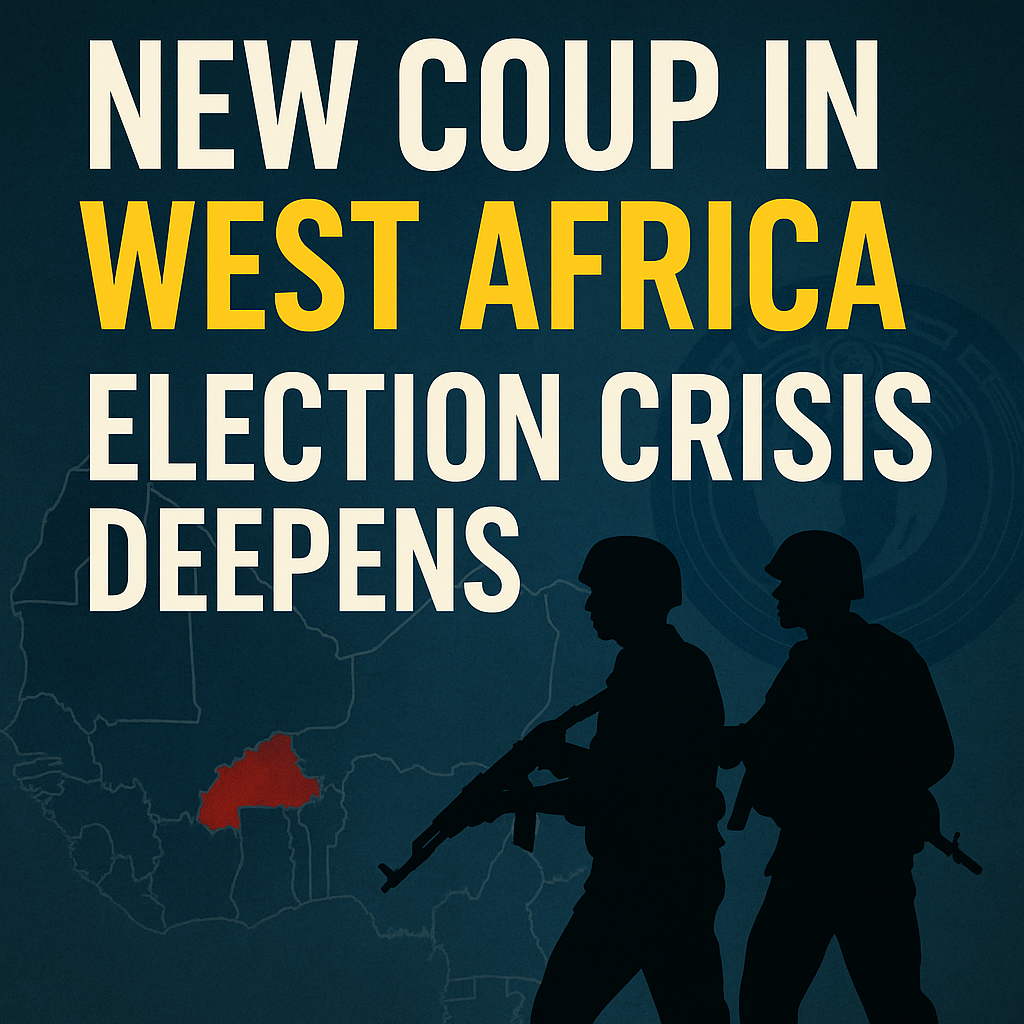
Guinea-Bissau Coup: Borders Closed, President Detained as Election Crisis Deepens

Africa has recorded yet another military takeover—this time in coup-prone Guinea-Bissau. In this week’s Security Update, Rimamnde Shawulu Kwewum breaks down the unfolding crisis, the actors behind it, and the implications for democracy across West Africa.

#SecurityUpdate #RimamndeShawulu #AfricaSecurity #NigeriaSecurity #GlobalConflicts #CoupInAfrica #WestAfricaPolitics #NationalSecurity

The coup followed a highly contested election between incumbent President Umaro Sissoco Embaló and leading challenger Fernando Díaz da Costa. As results were still being expected, senior military officers appeared on state television, announced the closure of borders, suspended the electoral process, and declared the installation of a High Military Command for the Restoration of Order.

The embattled president confirmed to international media that he had been arrested and deposed. As is typical in West Africa’s coup playbook, the junta immediately suspended parliament, restricted government activity, and imposed tight controls on the media.

This escalation comes against the backdrop of deep political dysfunction. President Embaló himself had dissolved parliament and prevented it from sitting for nearly two years, fueling unrest and accusations of authoritarian overreach. The Guardian, Reuters, and other global outlets report that drug-trafficking networks—which have turned Guinea-Bissau into a major narcotics transit hub to Europe—may be influencing both political and military elites.

Former Nigerian President Goodluck Jonathan and Mozambique’s Philipe Nyusi, who were in the country as election observers, have called for urgent ECOWAS and AU engagement. Portugal, the former colonial power, has condemned the coup and urged a return to the electoral process and protection of detainees.

Guinea-Bissau’s turbulent political history includes at least seven coups and attempted coups since 1980, with successful takeovers in 1980, 1999, and 2003. The country has long struggled with military factionalism, weak institutions, and elite conflict driven by drug-trade interests.

Regionally, this latest event adds to the wave of coups reshaping West Africa since 2020, including Mali, Burkina Faso, Guinea, Niger, and Gabon. Attempts to reverse these coups have weakened ECOWAS, leading to a legitimacy crisis and the withdrawal of several member states. Disillusionment with democracy—fueled by flawed elections, exclusion of opposition candidates, and weak governance—continues to deepen.

This edition of Security Update provides a clear, data-driven assessment of how failed political processes across Africa are driving instability, and what the latest coup means for the continent’s democratic trajectory.

📡 Subscribe to Security Update for verified weekly reports on Nigeria, Africa, and the world.

- Books by Rimamnde Shawulu -

spot_img

Most Popular

0 0 votes
Article Rating
Subscribe
Notify of
guest

0 Comments
Oldest
Newest Most Voted

More from Author

- Books by Rimamnde Shawulu -

spot_img

Read Now

Genocide, Crimes Against Humanity or Conflict? What the Documents on Nigeria’s Middle Belt Actually Say

A new episode of The Middle Belt Files reads the warnings, reports and letters at the centre of Nigeria's genocide debate, sets them against the strongest counter-arguments, and finds one point on which almost everyone agrees. How should the killings in Nigeria's Middle Belt be classified? The answer...

Missing Borno Schoolchildren: Six Months On, Mussa and Lassa Families Still Waiting

On 15 May 2026, gunmen attacked schools in two parts of Nigeria. In Oriire Local Government Area of Oyo State, attackers abducted 46 pupils and teachers from three schools. In Mussa, a community in Askira-Uba Local Government Area of Borno State on the fringe of the Sambisa...

State Police Bill on Tinubu’s Desk: Who Pays, Who Controls, and Who Takes the Call?

Nigeria is one presidential signature away from reversing a decision its military government made 60 years ago. The National Assembly transmitted the constitutional amendment establishing state police services to President Bola Tinubu for assent on 4 November. By then, between 29 and 30 state houses of assembly had...

Bandits Demand ₦100m for 14 Abducted Pupils as Attacks Hit Zamfara, Kaduna and Plateau

Fourteen pupils of an Islamiyya school abducted from a farm in Niger State remained in captivity at the end of a week that also saw eight security personnel killed in Zamfara and up to 20 villagers abducted in Kaduna, according to Ndeya Live's weekly Nigeria and Sahel...

Atiku’s ADC Ticket Voided a Day After Sokoto Launch as Opposition Questions the Courts

A court ruling, a contested voter register, an attack on Obi's convoy and APGA's move behind Tinubu made for one of the most consequential weeks of the 2027 campaign. A Federal High Court in Abuja has nullified Atiku Abubakar's presidential candidacy on the platform of the African Democratic...

Minna Detention Deaths: Panel Finds Suffocation, Not Disease, but No Officer Charged Yet

33 Dead in Civil Defence Custody: What the Minna Panel Found, and What Comes Next Standfirst: The federal investigative committee says the deaths of detainees held after raids on suspected illegal miners were entirely preventable. Weeks after its report, the question of criminal accountability remains open. A federal...

157 Civilians Killed in 10 Days as ISWAP Loses Foreign Fighters, Shura Council Member in Borno 

Taraba Massacre, Niger State Abductions and 34 Foreigners Arrested in Benue Standfirst: The military made significant counter-terrorism gains between 25 October and 3 November, but attacks on civilians continued across the North East, North West and North Central. At least 157 civilians were killed across Nigeria between 25...

From 10 to 62: Binnari and the Cost of Counting Late

On Friday, 23 October, gunmen entered Binnari, a river market town in Karim Lamido Local Government Area of Taraba State, shortly after Jumu'ah prayers on market day. Houses were burned and goods looted. Residents ran for the Benue River and the canoes that link the town to...

The Middle Belt’s Empty Villages Need Counting, Not Slogans

Lydia Ingev was 49 when she fled Tse Tokula, a farming village in Guma, Benue State, one night in 2014. She had already lost her husband and three sons to the killings. She took 12 dependents to a displacement camp in Daudu. She is 60 now, and...

Nigeria’s Deadliest Security Week: 15 Troops Killed, Child Murdered After Ransom Paid

Armed groups struck across six states between 18 and 24 October, killing at least 32 confirmed civilians and security personnel and exposing the limits of federal counter-insurgency strategy. ABUJA, 25 October 2026 — Fifteen Nigerian soldiers and Civilian Joint Task Force members were killed in a single Islamic...

The Middle Belt’s Hidden Crises: What  The  Death Toll Isn’t Telling You

More than 50,000 people have died in Nigeria’s Middle Belt since 2011. In several of those years, the death toll exceeded Boko Haram’s. And yet the crisis has never triggered a federal emergency declaration, a dedicated reconstruction body, or a completed criminal prosecution for any of the...

El-Rufai: Justice, Politics and the Battle for 2027

The legal battles involving former Kaduna State Governor Nasir Ahmad El-Rufai have raised questions extending beyond allegations of corruption and abuse of office. They have brought renewed attention to the relationship between political power, judicial independence and the future of opposition politics in Nigeria. At the heart of...
