
Poor health has become the most powerful figure in Tinubu’s presidency. It walks in without knocking. It taps a man on the shoulder. It whispers a simple message. You are done. The politicians obey. They always obey.
The presidential spokesman, Bayo Onanuga, now sits like a court scribe before the Bogeyman, taking instructions from poor health as though it were a senior minister of state. He listens, nods, and polishes each line of fiction with the care of a man convinced that truth is a luxury the country can no longer afford. He rehearses the script again and again. His job is simple. Poor health must sound convincing. Poor health must sound noble. Poor health must sound like the only force powerful enough to topple the party chairman and the Minister of Defence.
Then he retreats to his desk, opens his laptop, and releases the latest press statement from the Bogeyman, crafted with the precision of someone reporting a national emergency authored by poor health. And with a few taps, the script appears on his X handle like an official medical bulletin from an invisible clinic. Poor health has struck again. Another loyal soldier has fallen. Another servant of the state has been swept aside by an ailment no doctor has ever diagnosed. Onanuga says it all with the solemn pride of a man announcing a national honour, even though the country knows the real disease is political convenience dressed up as compassion. The country nods, pretends to believe, and moves on.
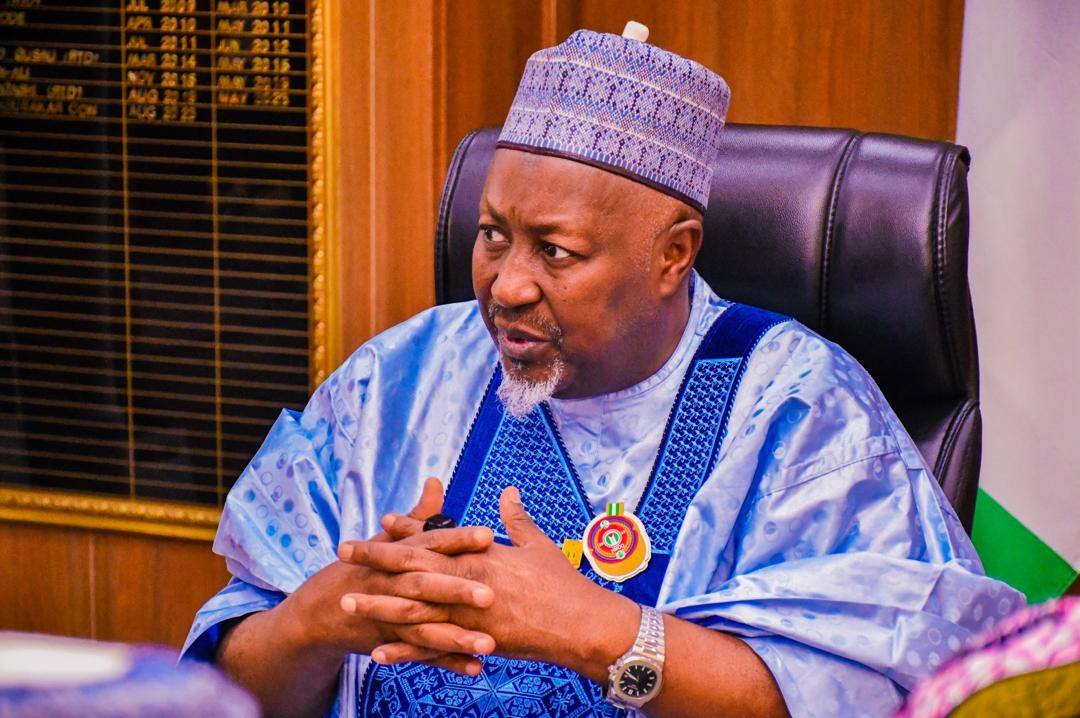
A few months ago, Dr Abdullahi Ganduje resigned as national chairman of the APC. He said he was unwell. His party chorused the same line. Newspapers dutifully reported it. Now, Minister of Defence, Badaru Abubakar, has followed the same script. He also says he is unwell. The world knows they were pushed. But poor health was fingered as the bogeyman. Again. Poor health never grants interviews. Poor health never defends itself. Poor health never speaks. But poor health is always blamed.
The Nigerian political class has a curious affection for excuses. Each excuse has a season. There was a time when foreign courses explained every absence. There was another time when national consultations explained every retreat. Now we have reached the era of poor health. It is the bogeyman of convenience. It is the ghost in the corridors of power. It is the all-purpose exit door when powerful men run out of powerful friends. In truth, there is nothing innocent about this game. These resignations are not driven by ailment. They are driven by panic and political firestorms. But such realities cannot be expressed in public. So a new fiction is created. The presidency and the political class write the scripts. The media play its role. The public is expected to swallow the fiction. And everyone pretends it is normal.
Poor health has now become a character in our national drama. It enters scenes abruptly. It removes players without debate. It protects their pride. It protects the facade of unity within the ruling party. It prevents scandal from becoming open revolt. It wipes away the mess of internal fights. It offers a polite way out. It allows politicians to escape responsibility. And because Nigeria is a country where the powerful rarely face consequences, the excuse is never questioned.
There is an Orwellian quality to this spectacle. It is straight out of the Ministry of Truth. The actors insist on a lie. The citizens are expected to accept it. The lie becomes official. Anyone who asks questions becomes the problem. Anyone who demands accountability is accused of making trouble. Anyone who seeks clarity is said to be playing politics. This is how absurdity becomes the national doctrine. The tragedy is that real poor health afflicts millions of Nigerians who cannot use it as an excuse. They cannot resign from hunger. They cannot step aside from insecurity. They cannot withdraw from the country’s broken hospitals. They cannot issue press statements about their conditions. They live with sickness the state refuses to treat. And they die quietly. Nobody blames a bogeyman for their fate.
So, when a politician waves the banner of poor health, it feels obscene. It feels dishonest. It feels like a mockery of ordinary people. The same leaders who could not fix the health system suddenly remember that health is important only when they need an exit line. They never resign to improve the hospitals. They only resign to escape political heat. And even then, they do not resign out of honour. They resign because someone stronger handed them the order. Our country has become so accustomed to these ritualistic lies that nothing shocks it anymore. If twenty ministers resign tomorrow claiming poor health, Nigerians will shrug. They have seen worse. They have endured worse. They know that truth is the first casualty in the corridors of power. They know that every resignation hides a battle. They know that poor health is simply a mask.
The pattern is almost predictable now. A scandal breaks. The party stiffens. Power blocs begin to drift. A once-untouchable figure suddenly becomes dispensable. The rumour mill roars to life. And then the announcement appears. Poor health has struck again. The man who was dancing at an event last week is now too unwell to continue. The man who toured the country during the elections is now too frail to speak. The man who once boasted about his strength now folds before an invisible ailment. It is a convenient script because it leaves no room for questions. You cannot interrogate a man who claims illness. You cannot demand evidence. You cannot insist on honesty. You must show sympathy. You must accept the line. You must pretend nothing else happened. It is a perfect shield. It is a perfect tool. It is a perfect way to remove a player without admitting the reason.
Tinubu understands this tool very well. He uses it with precision. He uses it to maintain order. He uses it to avoid open conflict. He uses it to protect the myth that everything is fine. But everything is not fine. A president party that hides decisions behind illness fears transparency. A president that speaks in euphemisms is a president that distrusts citizens. He prefers theatre to truth. Our country deserves better. It deserves leaders who speak plainly. It deserves institutions that do not hide behind fiction. It deserves a political culture that does not confuse manipulation with strategy. If a chairman is removed, say so. If a minister is sacked, say so. If a faction has taken over, say so. Do not blame the bogeyman. Do not drag poor health into every struggle. Do not insult the intelligence of the public. Nigerians are tired of these tales. Tired of the secrecy. Tired of the drama. Tired of the infantilisation of governance. Tired of being told that power changes hands because of illness when everyone knows it is because of politics. Nigeria is not a kindergarten. It is a country peopled by rational citizens who can handle the truth. Or at least deserve the chance to hear it.
Here’s a prophetic declaration; and I can see Primate Elijah Ayodele nodding in agreement: poor health will resign more ministers in the months ahead. It will remove more public servants. It will strike governors. It will even visit appointees who have never visited a hospital. It will do so because the political class has discovered its usefulness. It is the polite bogeyman. It is the soft landing pad. It is the national fig leaf. It will remain until the country demands honesty. For now, poor health remains the most powerful unelected force in Nigerian politics. It removes men more efficiently than the courts. More quietly than the opposition. More decisively than voters. It is the silent judge that ends careers without hearing a case.
What a country. What a bogeyman.