
When Generals Are No Longer Safe, What Hope Is Left for Ordinary Nigerians? Security Crisis Deepens

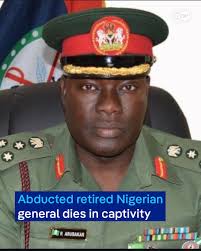
The kidnapping and death of retired Major General Rabe Abubakar has once again forced Nigeria to confront a deeply troubling question: if senior military officers are no longer safe, what does that mean for ordinary citizens?

In this episode of The Other Side, hosted by Rimamnde Shawulu, we examine the growing pattern of attacks against Nigeria’s military personnel, including retired generals, senior commanders, and officers who once stood at the forefront of the country’s security operations.

For decades, Nigerians have looked to the military as the ultimate line of defense against terrorism, insurgency, banditry, kidnapping, and organized criminal violence. Yet recent events suggest that those entrusted with protecting the nation have increasingly become targets themselves.

The death of Major General Rabe Abu Bakr after reportedly being abducted alongside his wife in Katsina State raises uncomfortable but necessary questions about the changing nature of insecurity in Nigeria. What does it mean when individuals with decades of military training, operational experience, and battlefield knowledge become vulnerable to the same criminal networks threatening ordinary citizens?

This documentary explores how Nigeria’s security landscape has evolved over the last two decades. From the emergence of Boko Haram and ISWAP to the rise of heavily armed bandit groups and kidnapping syndicates, the country has witnessed a dramatic transformation in the scale, sophistication, and geographical spread of violence.

The discussion traces the expansion of insecurity across regions including the North-East, North-West, North-Central, and parts of Southern Nigeria. Communities have been displaced, farms abandoned, schools attacked, and economic activities disrupted. Millions of Nigerians now live under varying levels of security uncertainty.

A key focus of this episode is the increasing vulnerability of senior military officers and retired personnel. We examine previous incidents involving high-ranking officers, the strategic implications of losing experienced military leaders, and the impact such attacks have on public confidence in national security institutions.

The programme also analyzes how criminal and terrorist organizations have evolved. Armed groups now employ more sophisticated tactics, including surveillance technologies, advanced communications systems, improvised explosive devices, and increasingly complex operational networks. As these threats continue to evolve, an important question emerges: is Nigeria’s security architecture adapting quickly enough to meet the challenge?

Beyond military operations, this episode examines broader issues including intelligence gathering, community cooperation, border security, youth unemployment, weapons trafficking, governance challenges, and the role of public trust in combating insecurity.

For younger Nigerians, especially members of Gen Z, insecurity has become a constant feature of national life. Many have grown up hearing stories of kidnappings, terrorist attacks, school abductions, communal violence, and attacks on communities. This raises important questions about how a generation shaped by insecurity views the future of the country.

The programme further explores whether peace agreements between communities and armed groups provide genuine solutions or merely create temporary pauses that allow criminal networks to regroup and expand their operations elsewhere.

Most importantly, this episode reminds us that security is not merely a military issue. It affects education, agriculture, investment, healthcare, governance, and the daily lives of millions of citizens. The targeting of military officers is ultimately not just a military story—it is a national story about the safety, stability, and future of Nigeria itself.

As Nigeria continues to search for solutions, difficult questions remain:

• Can intelligence systems be strengthened?
• Are security agencies receiving adequate resources and technology?
• How can communities contribute to early warning systems?
• What role should political leadership play in restoring public confidence?
• Can Nigeria build a future where neither generals nor ordinary citizens live in fear?

Join us as we examine the facts, challenge assumptions, and explore what these developments mean for Nigeria’s future.

Share your views in the comments section:

What do you believe is the biggest obstacle to improving security in Nigeria today?

If you find this analysis valuable, please like, share, and subscribe.

🔔 Subscribe for weekly insights on Nigeria’s politics, security, governance, and democracy.

Hosted by Rimamnde Shawulu Kwewum.

The Other Side — Fact-Based Conversations That Matter.

🔔 Subscribe for weekly insights on Nigeria’s politics and democracy.
- Books by Rimamnde Shawulu -

spot_img

Most Popular

0 0 votes
Article Rating
Subscribe
Notify of
guest

0 Comments
Oldest
Newest Most Voted

More from Author

The Middle Belt’s Hidden Crises: What  The  Death Toll Isn’t Telling You

More than 50,000 people have died in Nigeria’s Middle Belt since...

El-Rufai: Justice, Politics and the Battle for 2027

The legal battles involving former Kaduna State Governor Nasir Ahmad El-Rufai...

NDEYA LIVE · Nigeria and Sahel Security Briefing of October 4-14, 2026

NDEYA LIVE · YouTube Security Briefing NIGERIA SECURITY UPDATE 4–12 October 2026 |...

- Books by Rimamnde Shawulu -

spot_img

Read Now

Nigeria’s Deadliest Security Week: 15 Troops Killed, Child Murdered After Ransom Paid

Armed groups struck across six states between 18 and 24 October, killing at least 32 confirmed civilians and security personnel and exposing the limits of federal counter-insurgency strategy. ABUJA, 25 October 2026 — Fifteen Nigerian soldiers and Civilian Joint Task Force members were killed in a single Islamic...

The Middle Belt’s Hidden Crises: What  The  Death Toll Isn’t Telling You

More than 50,000 people have died in Nigeria’s Middle Belt since 2011. In several of those years, the death toll exceeded Boko Haram’s. And yet the crisis has never triggered a federal emergency declaration, a dedicated reconstruction body, or a completed criminal prosecution for any of the...

El-Rufai: Justice, Politics and the Battle for 2027

The legal battles involving former Kaduna State Governor Nasir Ahmad El-Rufai have raised questions extending beyond allegations of corruption and abuse of office. They have brought renewed attention to the relationship between political power, judicial independence and the future of opposition politics in Nigeria. At the heart of...

NDEYA LIVE · Nigeria and Sahel Security Briefing of October 4-14, 2026

NDEYA LIVE · YouTube Security Briefing NIGERIA SECURITY UPDATE 4–12 October 2026 | 15 Nigeria Events · 5 Sahel Events | Presenter: Rimamnde 80–100+ MIN. DEATHS (NIGERIA)15 NIGERIA EVENTS5 SAHEL EVENTS39 SAHEL SECURITY DEATHS21 NYSC MEMBERS RESCUED8+ STATES AFFECTED A. WEEKLY SECURITY OVERVIEW The week of 4–12 October 2026 was among the...

Nigeria 2027 Election: Supreme Court, Atiku vs Tinubu and the Battle for North Central Votes

Nigeria’s 2027 presidential race is moving from speculation to hard political tests: court rulings, candidate eligibility battles, opposition fragmentation, regional vote strategy and the practical machinery required to win a nationwide election. #Nigeria2027#The2027Race#AtikuVsTinubu#ElectoralAct2026#NorthCentralVotes#NigeriaDecides2027 In this edition of The 2027 Race, Rimamnde Shawulu Kwewum examines the developments reshaping the...

Plateau Attacks · Sokoto Bandits · Lakurawa Crisis · Katsina Ambush · Sahel Cross-Border Threat

Your weekly Nigeria and Sahel security briefing — 13 events, fully sourced, fully analysed. This week: nine people killed across Plateau State. Bandits abduct 28 in Sokoto — 16 still missing. A military intelligence ambush kills 18 bandits in Katsina. Security forces rescue 94+ kidnap victims in...

Causes of the Middle Belt Conflicts Nobody Tells You Middle Belt Files epi 3.

How does a cow walking into a farm turn into 50,000 deaths? In Episode 03 of The Middle Belt Files, we go underneath Nigeria's deadliest ongoing conflict to ask the questions most people aren't asking. Why did this crisis escalate so sharply after 2015? What does Lake Chad's...

Nigerian Military rescues 655 kidnap victims in nationwide operations as Senate prepares for high-level security summit

ABUJA, NIGERIA — The Armed Forces of Nigeria rescued 655 kidnapping victims and engaged in 367 operational encounters across various regional theatres during September, the Defence Headquarters disclosed in its latest monthly security briefing in Abuja. Addressing newsmen at the Defence Headquarters operational press conference, the Director...

Ukraine Operation Uses Drones and “Trojan” Vehicles to Capture 250 Russian Troops, CNN Reports

A daring counteroffensive by Ukrainian forces in the Donbas region has resulted in the capture of more than 250 Russian soldiers using advanced technology, including ground robots and explosive-laden armoured vehicles, according to a report by CNN. The offensive, dubbed "Operation Vivaldi," marks a significant tactical shift for...

Nigeria 2027: 18 Presidential Candidates, but the Real Contest Is for the States and Votes

Nigeria 2027: 18 Presidential Candidates, but the Real Contest Is for the States and Votes Nigeria's 2027 presidential contest has entered a more defined phase following the publication of INEC's final candidate list. Eighteen candidates are in the presidential field, including President Bola Tinubu, Atiku Abubakar, Peter Obi and...

What Is the Middle Belt? The Nigerian Region 60 Million People Call Home — and No Official Map Will Name

A new documentary series from Ndeya Live opens with the question Nigeria has avoided for over a century: what do you call the land between the north and the south? By Rimamnde Shawulu   |   The Middle Belt Files, Episode 1 There is a region of Nigeria that does not...

Nigeria 2027: Can Atiku, Obi & Makinde Unite? Inside the G100 Opposition Talks

Can Nigeria's opposition unite behind one presidential candidate against Bola Tinubu in 2027—or will competing ambitions and policy differences keep Atiku Abubakar, Peter Obi, Seyi Makinde and other challengers apart? #Nigeria2027Election#G100Coalition#NigeriaElectionWatch#ElectoralGeography#OppositionPolitics#RoadTo2027 In this edition of The 2027 Race, hosted by Rimamnde Shawulu Kwewum, we examine the G100 talks involving...
